Changan, Maxus: Mikano Motors Targets SKD-to-CKD Transition, Seeks Patronage of Made-in-Nigeria Vehicles
By Daphne Uduneje
Mikano Motors is positioning for a deeper role in Nigeria’s automotive manufacturing value chain, with the company targeting a transition from its current Semi-Knocked Down (SKD) assembly operation to Complete Knocked Down (CKD) production as it seeks stronger market demand for locally assembled vehicles.
The move, according to the company, will depend significantly on the ability of the domestic market to absorb higher volumes of locally assembled vehicles and provide the investment justification required for deeper localisation.
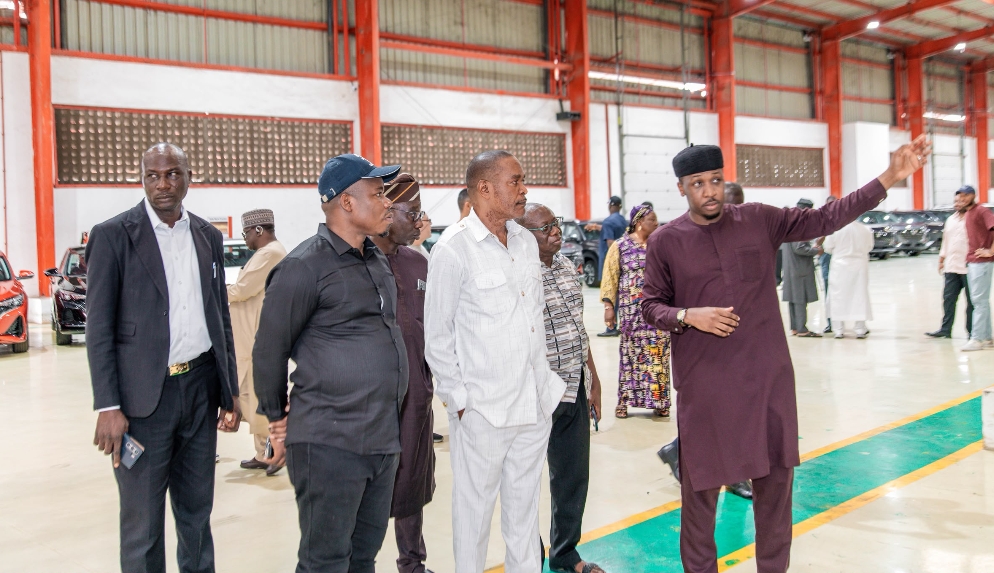
The National Operations Manager of Mikano Motors, Syam Abdulkadir, disclosed this during a familiarisation visit to the company’s vehicle assembly plant along the Lagos-Ibadan Expressway, Warewa, by the governing board and management of the National Automotive Design and Development Council (NADDC).
Mikano Motors, which holds the Nigerian franchise for Changan, including its Deepal sub-brand, and Maxus vehicles, currently has installed capacity to assemble between 15,000 and 20,000 vehicles annually, according to Abdulkadir.
However, he said actual market demand remains significantly below the company’s production capability, making inadequate patronage a more immediate constraint than assembly capacity.
The development highlights one of the central challenges confronting Nigeria’s automotive industrialisation agenda: while manufacturers are investing in local assembly capacity, weak purchasing power, high vehicle acquisition costs and competition from imported vehicles continue to constrain demand.
Abdulkadir said stronger patronage of locally assembled vehicles would give manufacturers greater confidence to invest in deeper production, local component manufacturing and technology transfer.
“Right now, we have an SKD assembly plant. In the near future, we plan to do CKD. Once we have CKD, we will have a larger capacity to produce more vehicles for our customers,” he said.
The transition from SKD to CKD represents a significant step up the automotive manufacturing ladder, requiring greater levels of local production, assembly integration and investment in supporting infrastructure and components.
For Mikano, the proposed transition also underscores the importance of creating a market environment capable of supporting sustained investment in domestic vehicle production.
Abdulkadir commended NADDC for its support for the gradual development of Nigeria’s automotive manufacturing industry, but stressed that policy support would need to be matched by market demand if manufacturers were to deepen their investments.
He identified vehicle financing and trade-in arrangements as some of the mechanisms being deployed by Mikano Motors to address affordability and stimulate demand.
Under its trade-in programme, customers who purchase vehicles from the company can return them when they decide to upgrade to newer models.
Because Mikano retains the service, warranty and maintenance history of the vehicles, the returned units can subsequently be introduced into the used-vehicle market.
“In terms of incentives, we offer our own used vehicles. In Mikano Motors, for example, we have the trading options, which means that if a customer buys a vehicle from us today, and in a year or two years decides to trade the vehicle because they want a different model, we are able to take that vehicle back,” he explained.
“Already, we have the history of the vehicle, service history, the warranty and others. With this, we are able to sell to somebody who is looking for more affordable vehicles.”
Beyond vehicle assembly, Abdulkadir said Mikano was also interested in expanding its participation in local component manufacturing as the operating environment improves.
He recalled that the company had previously produced brake pads locally, but was forced to discontinue the operation after imported alternatives entered the market at substantially lower prices.
According to him, the experience demonstrated the difficulty local component manufacturers face when imported products enjoy significant cost advantages, even where locally manufactured alternatives offer higher quality and durability.
“We will be more into local content production beyond the brake pads with future support,” he said.
The issue of local component manufacturing also featured prominently during the NADDC delegation’s assessment of the Mikano facility, with the council identifying the experience as an example of the structural challenges confronting Nigeria’s automotive localisation drive.
The Director-General of NADDC, Otunba Oluwemimo Joseph Osanipin, said the visit was intended to provide the council’s governing board with first-hand knowledge of the company’s operations, production capacity and challenges.
Osanipin specifically cited Mikano’s former brake-pad manufacturing operation as evidence of the competitive pressure facing domestic component manufacturers.
He said the locally manufactured brake pads, despite their quality, had been unable to compete effectively with imported alternatives because of the wide price disparity.
“Mikano has one of the best brake pads in the country,” the NADDC DG said, noting that the experience would contribute to the council’s ongoing efforts to develop an appropriate legislative framework for the automotive industry.
He disclosed that the council was examining measures that could create a more sustainable operating environment for vehicle assemblers and local component manufacturers.
For the Chairman of the NADDC Governing Board, Chief Emma Eneukwu, the Mikano facility also demonstrated that Nigeria possesses the human capital required to deepen domestic automobile production.
Eneukwu observed that the workforce at the plant was predominantly Nigerian, with employees acquiring practical experience in vehicle assembly, manufacturing processes and related automotive technologies.
He called for stronger policy support for locally manufactured vehicles and components, arguing that domestic manufacturers would struggle to compete where imported vehicles and parts enjoy substantial cost advantages.
He also advocated measures to regulate the importation of used vehicles, including consideration of age limits, as part of broader efforts to protect domestic manufacturers and encourage investment in local production.
According to Eneukwu, the absence of appropriate industry protection mechanisms could weaken the viability of local assembly plants, particularly where imported vehicles enter the market at prices below those of locally assembled alternatives.
The board chairman said the information gathered during the factory visit would strengthen the board’s efforts towards the actualisation of an automotive industry law capable of providing a more predictable policy environment for investors.
Such legislation, he said, would be important for supporting investment, promoting local content development and strengthening the long-term viability of Nigeria’s automotive manufacturing base.
The developments at Mikano Motors come as Nigeria continues to seek a shift from vehicle import dependence towards a more integrated automotive manufacturing ecosystem.
For manufacturers, however, the path from assembly to deeper localisation will depend not only on installed capacity and government incentives, but also on the ability of the market to generate sufficient and sustainable demand for vehicles produced within the country.
The Mikano experience therefore brings the demand side of Nigeria’s automotive industrialisation debate into sharper focus: deeper local manufacturing can create jobs, skills and component opportunities, but manufacturers require a viable market and competitive operating environment to sustain the investments needed to move from SKD assembly to CKD production.