


How Prediction Markets Made Speculation Respectable
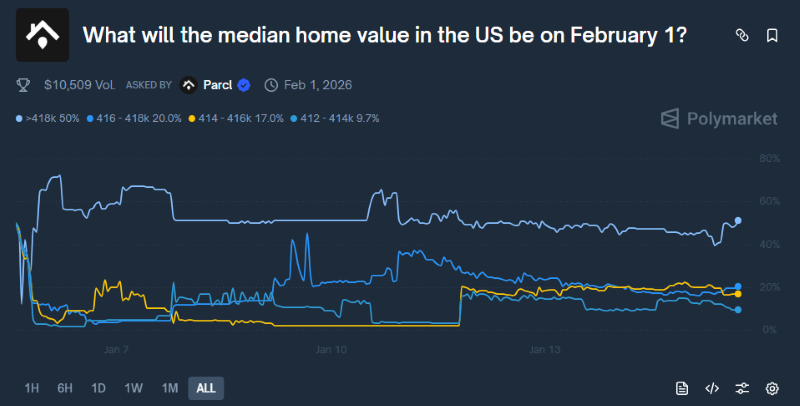
Prediction markets are having a moment as the events on which bets are possible expand, while their presence and profile has grown increasingly mainstream with the financialised respectability of a market and slick graphics and charts – but it speaks to a world in which everything becomes a casino, and a future can be bought on anything.
Why it matters for marketing
For a discipline like marketing in which complex unstructured signals matter, the rise of a new source of information – however controversial – is interesting. But more than anything it’s a masterclass in category repositioning, alongside some creative regulatory manoeuvres.
By presenting themselves as markets rather than bookies, platforms like Polymarket borrow the legitimacy, neutrality, and seriousness of finance. This is not cosmetic. Category framing determines who is allowed to participate, where the product can appear, and how it is discussed.
It comes into view as prediction market insights move into the mainstream with journalistic citations and an official partnership with the Golden Globes earlier this month.
What’s going on
The idea behind prediction markets – other than the betting – is that the financial stake people have will render more accurate predictions. In that way it is framed both as a kind of information service and a way to, in its own words, “profit from your knowledge” – an implication that insiders could cash in on events they might know about.
This runs from major geopolitical events through to daily bets on how many tweets Elon Musk will post in a day.
Prediction markets suggest how far framing, design, and legitimacy can take a product. But they also show how quickly a new (or perhaps repackaged) idea can become normal, acceptable, and even treated as inevitable.
Predictions open up housing speculation
“Polymarket ushered in the inevitable last week when it debuted markets that allow users to speculate on home prices in a handful of major metropolitan areas such as Los Angeles, Miami, and New York City,” Business Insider reports.
Data form Parcl, a housing data firm, enables punters to bet on median home prices across the US or across the cities that the new Polymarket vertical will cover.
Housing, in markets with expensive houses, hasn’t been simply about homes for people for a long time. Instead, they are financial instruments, and this kind of betting makes the market more than just a bet from the homeowner, but a financial-style futures market.
It chimes with signals we’re picking up, as traditional milestones like home ownership are reset. There’s a bitter irony here: for younger generations unlikely to be able to buy a home themselves, they might still be able to make some money on property price fluctuations without needing the deposit for a mortgage.
As one commenter on the US median home value to February market put it:
“YES! I am GETTING EXPOSURE TO REAL ESTATE, WITHOUT DOWN PAYMENTS! FINALLLY!” (sic)
Trades on war situations change the tone
The topics and events on which people can bet have also grown murkier, and riskier on Polymarket. Punters can currently bet on war situations, not least moments in the Russian invasion of Ukraine, events in the South China Sea, and even whether the US will strike Iran.
Bloomberg reports that now US senators are questioning the legality of betting on war, under federal law. While competitors don’t get involved in prediction markets based on war due to the occasionally perverse incentives they create, it is a risky, morally grey area.
In context: casinoification
Casinofication is undeniably big business; that’s not news. Some of the biggest platforms like Polymarket and competitor Kalshi are raising money at colossal valuations – $9bn and $11bn, respectively. In the summer, Intercontinental Exchange, owner of the NYSE, took a £2bn stake in Polymarket.
Prediction markets follow a trend that began in 2018 with a Supreme Court decision that upheld the legality of a New Jersey state law which allowed states to decide whether residents could bet on sports (and other things). Before then, betting had been outlawed nationwide since 1992.
However, what makes these modern prediction markets different is that they are not traditional bookies but brokers of futures contracts similar to those offered for commodities. This places them under the regulatory eye of the Commodity Futures Trading Commission.
Where this is problematic is in states that have continued to outlaw sports betting or where only people over the age of 21 can gamble. Prediction markets give an avenue to otherwise illegal sports betting, critics allege, empowering eighteen-year-olds to bet on basketball games, even if they’re technically buying outcome futures.