Information Minister Calls for Transition from Creative Pastimes to Commercial Assets at NEMCEA 2026
By Azeez Disu
The Federal Government of Nigeria has challenged the country’s electronic media stakeholders and content creators to transition from viewing creativity merely as a pastime to treating it as a high-value economic enterprise.
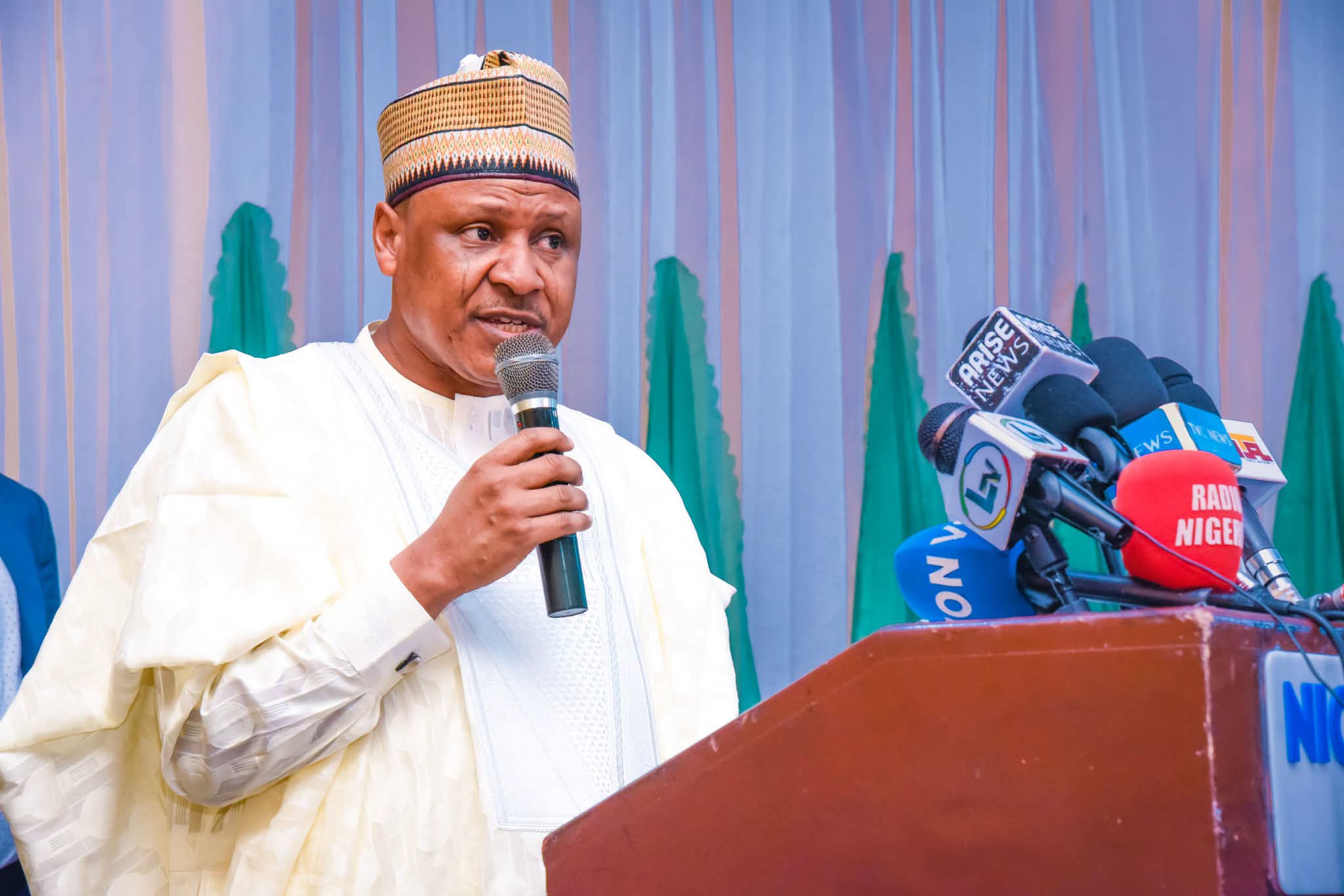
Speaking on Wednesday, 2 September 2026, at the official opening ceremony of the fifth Nigerian Electronic Media Content Exhibition and Awards (NEMCEA) 2026, held at the Ijakadi Theatre, Radisson Blu Hotel, Ikeja, Lagos, the Honourable Minister of Information and National Orientation, Alhaji Mohammed Idris, emphasised that the future of Nigeria’s creative economy depends on professionalising the craft and safeguarding intellectual property.
The Minister, who was represented by Dr Olalekan Fadolapo, Director-General of the Advertising Regulatory Council of Nigeria (ARCON), delivered the keynote address to a distinguished gathering of creators, broadcasters, producers, advertisers, and regulators. Convened under the theme “The Creator’s Economy – Elevate Your Craft, Secure Your Future,” the event served as a critical platform to address the intersection of creative brilliance, national policy, and commercial viability.
In his address, Alhaji Mohammed Idris stressed that the creator’s economy is not simply about producing content and attracting online followers, but about transforming creativity, knowledge, and intellectual property into sustainable economic value.
“The days when creativity could be treated only as a hobby are gone,” the Minister declared. “Creativity is now business. Content is an economic product, intellectual property is an asset”. He urged creators to pay greater attention to quality, improve business management, learn how to negotiate contracts, and protect their rights to build sustainable revenue models.
Highlighting the sector’s importance, the Minister noted that Nigerian stories, from Nollywood and television entertainment to podcasts, animation, and digital content, possess an extraordinary ability to travel across international borders. To build an ecosystem where creators earn fairly and investors can confidently deploy capital, the Minister reiterated the Federal Government’s commitment under President Bola Ahmed Tinubu’s Renewed Hope Agenda.
Under this agenda, the creative economy is being positioned as a major contributor to economic growth, employment, and Nigeria’s global influence. The Minister cited key approved initiatives, including the Creative Economy Development Fund and the Creative and Tourism Infrastructure Corporation, alongside the Creative Leap Acceleration Programme (CLAP), which is designed to support skills development, mentorship, and access to funding.
“The creative industry is not on the margins of the economy. It is part of the economy,” the Minister asserted, adding that it drives advertising, supports technology, and gives Nigeria the opportunity to tell its own stories to the world.
Addressing the rapid technological changes in the industry, the Minister pointed out that the boundaries separating television, radio, film, and digital media are increasingly blurred. He highlighted both the immense opportunities and serious risks presented by Artificial Intelligence (AI) in production and multilingual distribution.
“Who owns AI-generated content? How do we protect creators whose work may be used to train technology without their consent? How do we prevent technology from becoming a tool for plagiarism, misinformation and fraud?” the Minister asked, calling on government, regulators, and the creative community to confront these challenges together.
He also implored creators to exercise ethical responsibility, particularly as another election season approaches, by resisting the temptation to sacrifice truth, human dignity, and national cohesion for clicks and controversy.
“Nigeria needs a creative industry that is bold and innovative, but also responsible,” he stated. He concluded by encouraging young creators to take their talent seriously, understand the business behind it, and continually improve.
Following the Minister’s address, the President of the Electronic Media Content Owners Association of Nigeria (EMCOAN), Adeniji Omirin, welcomed delegates and highlighted NEMCEA’s evolution into a premier marketplace for the discovery, exchange, and exhibition of electronic media content.
Omirin explained that this year’s edition was deliberately designed to facilitate learning, networking, and business opportunities. He pointed to key features such as the Director-Generals’ Roundtable, aimed at fostering frank and constructive regulatory conversations, and the Masterclass Series to help creators sharpen their skills.
“Let us elevate our craft, strengthen our industry and secure the future of the creator,” Omirin charged the assembly.
On his part, the Project Director of NEMCEA 2026, Alayande Stephen T. noted that as the lines between television and digital continue to blur, electronic media practitioners must adapt to highly dynamic audiences and evolving technology.
“As custodians of narrative power, we must go beyond entertainment,” Alayande asserted. He called for aligned structures, the enforcement of local content quotas, the complete realisation of the Digital Switch Over (DSO), and the building of sustainable economic models that protect creators while serving audiences. While commending the Federal Government and the National Broadcasting Commission (NBC) for their progress on the DSO, Alayande added a cautionary note: “the work has only just begun”.