IIF Urges Institutional Investors to Back Nigeria’s Impact Economy, Launches Policy Report
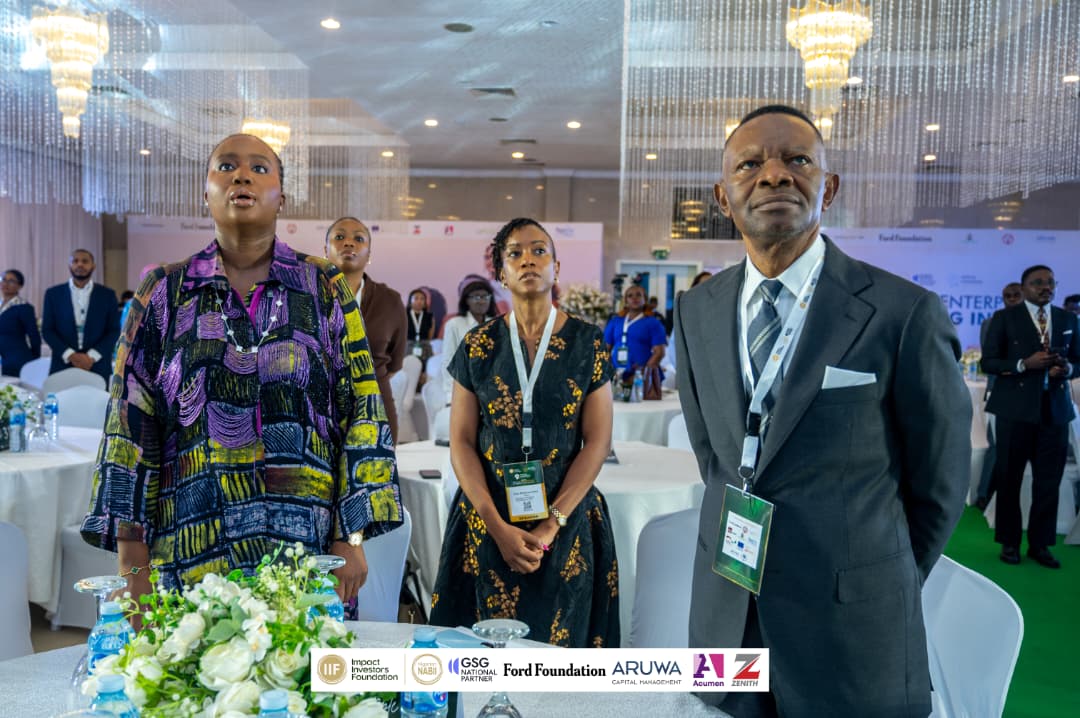
The Impact Investors Foundation (IIF) has called for stronger participation by Nigeria’s institutional investors in financing businesses that can drive inclusive growth, as it convened investors, policymakers and development partners in Lagos for its 9th Annual Convening on Impact Investing.
Held on 25 and 26 November at the Civic Centre, Victoria Island, the event focused on “Unlocking Institutional Capital for Nigeria’s Impact Economy”. It brought together representatives from the investment, public, private and development sectors to discuss how domestic capital can reach investment-ready enterprises.
The convening highlighted a gap between Nigeria’s substantial pools of institutional capital and the financing needs of businesses. Pension funds, insurance capital, sovereign investment vehicles, development finance institutions, banks and other investors hold significant resources, but relatively little reaches enterprises with the potential to create jobs and support inclusive growth.
According to the National Pension Commission (PenCom), pension assets stood at ₦31.8 trillion as of August 2026, with more than 11.3 million retirement savers. Of that total, ₦17.8 trillion was invested in Federal Government securities, while infrastructure funds held ₦344.62 billion and real estate investments stood at ₦132.81 billion.
Meanwhile, MSMEs account for 96.9 per cent of businesses, 87.9 per cent of employment and 46.32 per cent of GDP, according to PwC’s 2024 MSME Survey, which cites NBS and SMEDAN data. The African Development Bank estimates that these businesses face a funding gap of about $160 billion.
“Nigeria’s pension industry now manages more than ₦31 trillion, while the small businesses that provide close to nine in ten of our jobs are starved of growth capital. That is not a shortage of money. It is a shortage of structure and shared confidence,” said Oare Ehiemua-Ochui, CEO of the Impact Investors Foundation. “Institutional investors are not hesitant because impact is unattractive. They are careful because they hold other people’s retirement savings in trust, and they are right to be. Our task is to build the pipelines, standards and policy clarity that let prudence and purpose point in the same direction.”
A key announcement was the launch of the Nigeria Impact Investing Policy and Diagnostic Report, presented by Mr Inye Kemabonta of Plus Element Consulting. The report examines the policy and market conditions affecting domestic institutional investors’ participation in the impact economy.
The foundation also unveiled the rebranded Nigeria Impact Economy Community (NIEC), a platform bringing together public, private and development-sector stakeholders to advance the country’s impact economy.
Sessions explored how policy, regulation and market innovation could help mobilise capital at scale. Representatives of the Securities and Exchange Commission Nigeria and the Bank of Industry discussed ways regulators and development finance institutions could attract domestic institutional investment, with a focus on measurable outcomes such as job creation, import substitution and reduced carbon emissions.
Leaders from the Nigeria Sovereign Investment Authority, PenCom, the Pension Fund Operators Association of Nigeria, Kuramo Capital Management and the Ministry of Finance Incorporated considered the policy, fiduciary and market barriers shaping investment decisions. Goodwill remarks were delivered by Senator Abubakar Bagudu, Minister of Budget and Economic Planning; Dr Kingsley Tochukwu Udeh, Minister of Innovation, Science and Technology; and Mrs Titilayo Oshodi, Special Adviser to the Governor of Lagos State on Climate Change and Circular Economy.
The programme also examined how to build a stronger pipeline of investable enterprises. Discussions covered financing research and innovation, preparing entrepreneurs for institutional capital, improving project bankability through technical assistance, and investing in underserved markets and SMEs. Other sessions looked at climate investment, the creative economy, and the use of artificial intelligence in ESG reporting and impact measurement.
In partnership with Lagos Angel Network and Impact Hub, IIF also hosted a session on developing a new generation of impact angel investors. Curated deal rooms held over the two days connected investment-ready SMEs with institutional and impact investors.
The convening concluded with the IIF Annual Dinner and Awards, recognising organisations advancing impact investing and delivering measurable social and environmental change. The 2026 awards included the Social Enterprise and Impact Investor categories, as well as the Innocent Chukwuma Award for Social Impact.
“Nine years ago, impact investing in Nigeria was a conversation among a few pioneers. Today it is a market, and what we saw in this room tells me the next chapter will be written by domestic institutions. The ambition now is to turn this energy into action: capital that reaches the entrepreneur with a bold idea, the factory that is ready to scale and the community waiting for opportunity. We will measure ourselves by the enterprises that grow, the jobs they create and the lives they change. Nigeria has everything it needs to lead, and together we will make it happen,” added Oare Ehiemua-Ochui.
IIF said the event closed with renewed commitments from policymakers and institutional investors to address barriers preventing domestic capital from reaching enterprises. The foundation also called for continued support for the Nigeria Impact Economy Community and clearer pathways for investment in businesses with the potential to deliver broad economic and social benefits.
Note: The supplied copy says the event took place on 25–26 November 2026. Published reports confirm those dates and the event’s main announcements. Impact Investors Foundation · Business Post Nigeria.