


How Global Sporting Events Will Shape Travel in 2026: How Marketers Can Respond
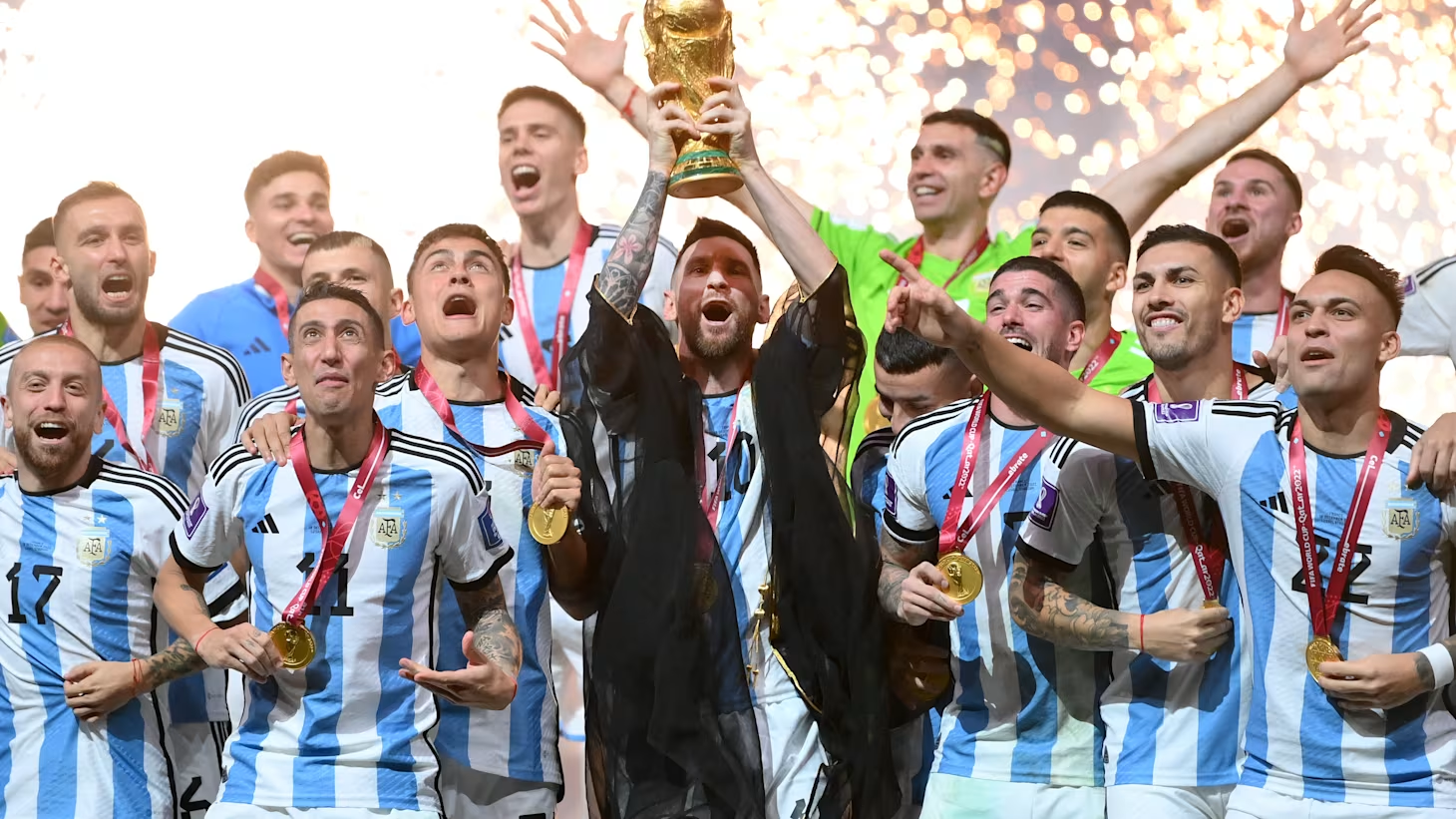
2026 will be a busy year for sports tourism, beginning with the Milano-Cortina Winter Olympics and carrying through to the FIFA Men’s World Cup in the summer and beyond. Major competitions will take place across Europe, North America and Asia, creating sustained movement across borders as fans travel domestically and internationally to watch their favourite sporting events.
For the complete insight, WARC’s latest Industry Snapshot explores the growth of sports tourism, as part of five key trends in the travel & tourism industry in 2026, and draws out practical examples of how brands can engage right now.
Why mega sporting events matter
Global research by Expedia shows that international sports travel has grown into a meaningful segment of the tourism market, accounting for 10% of global tourism spending. 44% of sports fans now travel internationally for events, with the share even higher among younger travellers.
For marketers and agencies, this means that the year will unfold with a series of opportunities tied to global touchpoints and events, each drawing its own wave of attention and travel activity. Those in the travel and tourism sector that maintain visibility during these waves of interest will be more likely to gain influence where fans choose to stay and explore.
How marketers can respond
1. Identify what drives incremental spending during a sports-driven trip.
With most sports event-driven trips lasting between two and six days and fans spending over $1500 per trip, travellers invest heavily in experiences beyond the match itself, from accommodation and dining to local exploration. Understanding when, where, and how these travellers choose to spend will unlock opportunities to reach a greater share of this high-value audience.
2. Align with high-attention cultural moments.
Major sporting events create predictable spikes in attention, and that attention is increasingly digital. Ampere analysis shows that 94% of Gen Z keep their phones close while watching sports, often multitasking by checking stats or engaging on social platforms, creating a prime opportunity for brands to influence fans in real time. Even without formal sponsorship, brands can tap into these high-attention cultural moments by aligning content and partnerships with the momentum surrounding each event.
3. Build early affinity with fast‑growing sports.
Several sports categories are gaining momentum, creating openings for brands to establish credibility before these spaces mature. Women’s sports is a clear example: WARC data shows awareness of the FIFA Women’s World Cup has reached almost 80% of the general population, yet brand investment still lags behind consumer interest. With two‑thirds of Women’s World Cup fans finding brands more attractive when they participate in sponsorship, early movers can secure meaningful long‑term affinity as audiences like these continue to grow.
Credit: WARC