ADVAN President Urges Nigerian Brands to Turn Local Challenges into Continental Successes
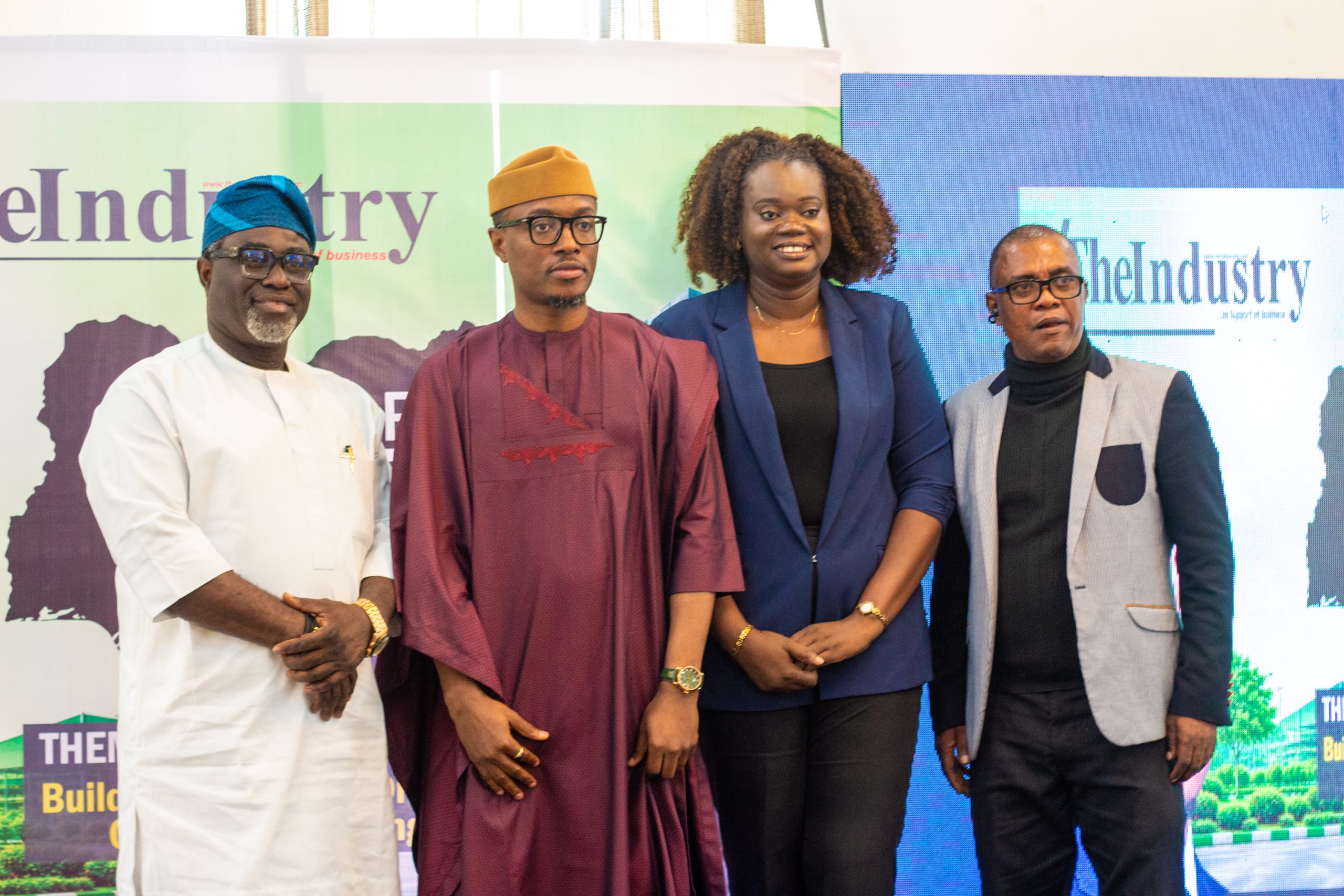
Mr. O’tega Ogra, Senior Special Assistant to President Bola Ahmed Tinubu on Digital Engagement and New Media, and President of the Advertisers Association of Nigeria (ADVAN), has issued a compelling challenge to Nigerian businesses: to develop brands and solutions that transcend local markets and compete across Africa and the world.
During his keynote address at The Industry Newspaper’s Top 50 Nigerian Companies of Impact 2026 Awards, held at the Lagos Oriental Hotel, Victoria Island, under the theme “Building Resilience, Driving Growth: Nigerian Companies Shaping the Next Decade,” Ogra highlighted the importance of resilience and innovation in shaping Nigeria’s future.
He spotlighted Bergmans Security Consultant and Supplies Limited, a Nigerian firm now leading the $3.1 billion AfCFTA customs modernisation project. “A few days ago, Wamkele Mene, Secretary-General of AfCFTA, arrived at Nigeria Customs and saw B’Odogwu, our Unified Customs Management System, already running,” Ogra shared.
“The Secretariat had options. Companies from outside Africa wanted the work too. It chose an African company. A Nigerian company.”
Through its subsidiaries, AfriTrade CMP Limited and Trade Modernisation Project Limited, Bergmans will implement the continental project following successful proof-of-concept in Nigerian ports. “The Nigerian market became its proving ground. The expertise developed here is now being taken to the continent,” Ogra explained. “Companies that learn to build functioning systems in difficult conditions acquire experience that travels.”
Ogra emphasised that Nigeria’s resilience must go beyond mere survival. “There is ingenuity in a manufacturer generating his own electricity. There is ingenuity in an SME rebuilding its model every time costs change. But there is also a lot of productive energy being consumed by those problems,” he noted.
“Our ambition over the next decade should be to make it easier for Nigerian companies to spend more of their energy competing and less of it compensating. That requires the government to do its work. It also places an obligation on business.”
He pointed to banks, fintech, Nollywood, and Nigerian music as sectors that have turned local challenges into global advantages. “Nigeria gives our companies something many businesses elsewhere would envy: a huge domestic market in which to learn. The question is what we do with it.”
As ADVAN President, Ogra stressed that Nigerian brands must travel with Nigerian culture. “Our culture already travels extraordinarily well. Our businesses should travel with them. We should be building more Nigerian brands for which Lagos is the beginning of the story, not the limit of the market.”
Trust, he added, will define the next decade more than attention. “In advertising, attention can be bought. Trust cannot. The consumer eventually decides what the brand means.”
On the role of technology, Ogra stated, “AI is no longer a future event. The useful question is what happens when a task that took three days can be done in an afternoon. What happens when a manufacturer can anticipate machine failure? That is where AI becomes useful to me: when it becomes productivity.”
He urged companies to apply technology swiftly to solve real problems. “The companies shaping the next decade will be those that do this.”
O’tega Ogra also called on media and corporate Nigeria to tell a more balanced story about the country. “Nigeria cannot understand itself only through its failures. A new factory is part of the Nigerian story. A Nigerian company winning a continental assignment is part of it, too. Confidence is also built from evidence.”
He defined “Companies of Impact” by asking, “What became possible because this company existed? Perhaps somebody got a first job. A local supplier grew. A technology platform made thousands of SMEs more productive. Or a Nigerian company built infrastructure at home that became relevant to an entire continent.”
Congratulating the 2026 honourees, Ogra concluded, “The recognition should come with pressure. Nigeria needs many more companies worthy of this list. Businesses capable of solving difficult problems here, employing Nigerians, and discovering that what they learned at home has value elsewhere.”
“Ten years from now, I hope people routinely come here to study Nigerian companies, Nigerian technology, Nigerian manufacturing and Nigerian brands because something built here has become the reference point elsewhere. That is a more useful measure of resilience. And a much more ambitious definition of impact.”
The annual list celebrates Nigerian companies that drive national development through job creation, innovation, good governance, and measurable social impact.