Dangote Refinery Pioneers European/Asian Merchant Model in Nigeria, Sets New Industry Standards- MD
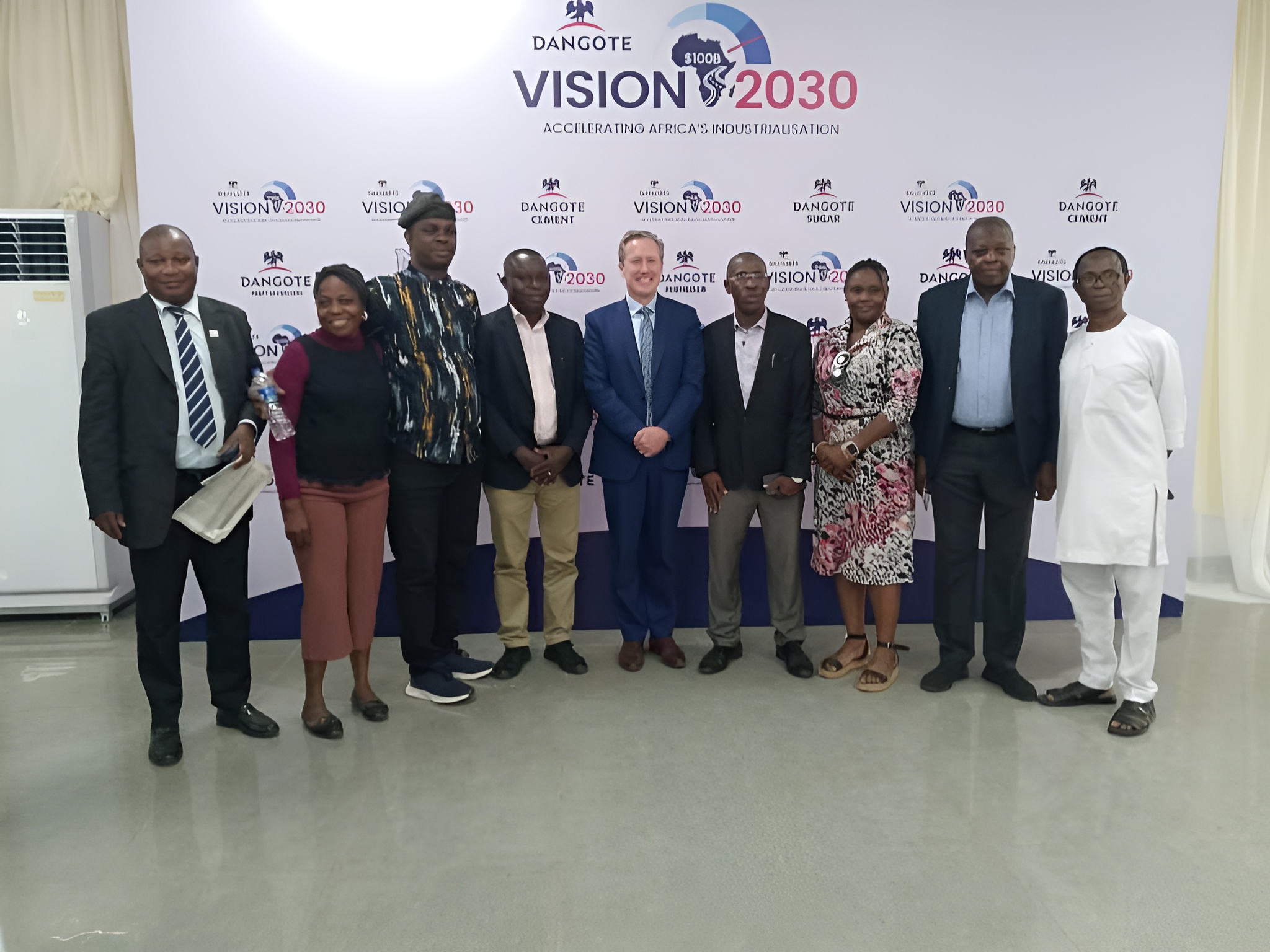
The Managing Director of Dangote Petroleum Refinery and Petrochemicals (DPRP), Mr. David Bird, has revealed that Dangote Refinery is unlike any other Nigerian refinery. It operates on a European/Asian Merchant Refinery model, positioning itself to become the world’s largest and most advanced refinery with its hybrid automation infrastructure and adherence to international best practices.
Mr. Bird also highlighted that the refinery features a state-of-the-art configuration designed to meet modern standards for high-quality fuel supply. Speaking during a media briefing and facility tour of the Dangote Petroleum Refinery and Petrochemicals complex at the Free Trade Zone (FTZ) in Lagos, he stated that the plant is setting new standards for cleaner fuels across Africa, both in the short and long term.
He pointed out that West Africa has historically been a destination for inferior and substandard petroleum products from abroad. However, the entry of Dangote Petroleum Refinery and Petrochemicals is expected to reset the benchmarks for petroleum product distribution and supply across the continent.
According to Mr. Bird, the refinery prioritises meeting Nigeria’s local fuel demands by eliminating fuel queues nationwide. Simultaneously, it aims to serve export markets by sourcing crude oil to ensure uninterrupted operations.
He stressed that Dangote produces high-quality fuels aligned with international environmental and health standards. Debunking circulating rumours, Mr. Bird insisted that the refinery operates under stringent, internationally recognised best practices and cannot compromise on fuel quality or safety standards. “It’s a Nigerian company but an internationally certified refinery,” he emphasised.
Mr. Bird also noted that since commencement of operations, Dangote Refinery has been able to resolve Nigeria’s perennial petrol scarcity, especially during festive seasons, by maintaining a constant supply of petroleum products to the country.
Highlighting its uniqueness, he explained that the refinery differs from others because it can distribute products both by sea and land, adhering to the highest industry standards.
Regarding energy sourcing, Mr. Bird revealed that the refinery currently sources its power internally from alternative energy sources — steam and gas turbines — generating 500 megawatts for its operations. He also announced plans for growth and expansion under the Vision 2030 programme.
The Dangote Group is also planning to expand its nearby port facilities to accommodate more ships, particularly from Brazil and other countries, which regularly bring raw materials and facilitate fertilizer exports.
He stated, “Dangote Refinery was not like any other. It is a hybrid of United States, European and Asian Merchant refinery models in Nigeria. Dangote Refinery combined all these with more stringent quality standards. We source about 25 crude stocks but the one from Nigeria takes the highest share of 65 percent while other sources take 35 per cent.”
He added, “Dangote Refinery is not a single trade entity; aside from petroleum, we produce other intermediate products such as diesel, kerosene, Jet A1, gas and other downstream products.”
Supporting this, Mr. Tony Chiejina, Group Branding and Communications Manager, Dangote Group, reflected on Nigeria’s history of fuel scarcity, noting that since 1975, it has been associated with festive seasons.
He emphasised that Dangote Petroleum Refinery and Petrochemicals holds great promise for Nigeria, calling on industry stakeholders and Nigerians to support the company in achieving its goals for Nigeria’s oil and gas industry, particularly the downstream sector.