DecisionSpaak, Gbenga Fawehinmi Foundation Partner to Boost AI Education for Nigerian Secondary Students
A technology-focused innovation firm, DecisionSpaak, and the youth-oriented Gbenga Fawehinmi Foundation have formalized a partnership to address Nigeria’s growing digital skills gap, starting with secondary school students in Ondo State.
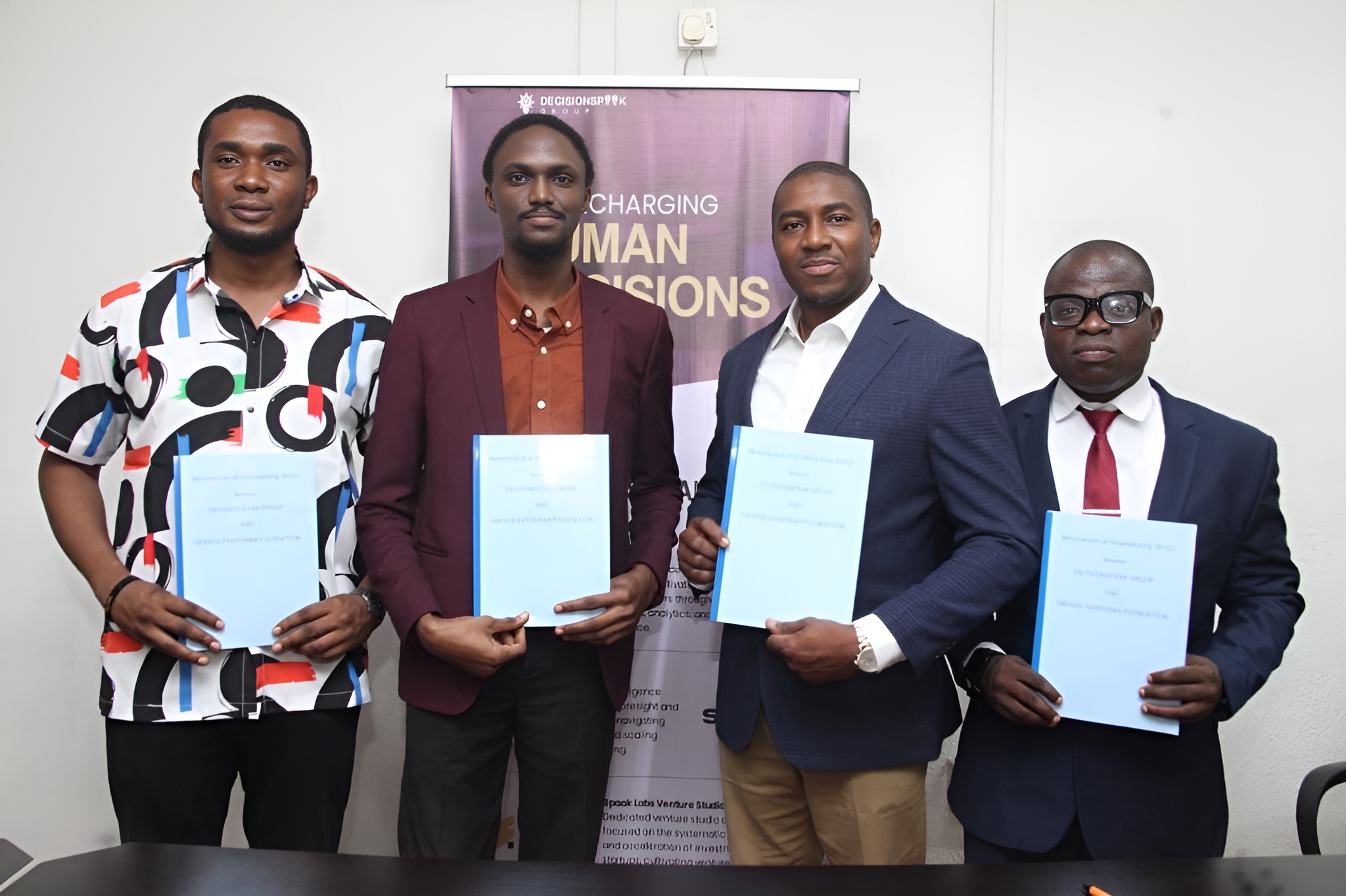
The two organizations signed a Memorandum of Understanding in Lagos, demonstrating their shared vision to enhance access to artificial intelligence, digital literacy, and STEM education for Nigerian youth.
During the signing event, Philip Ade-Akanbi, President and CEO of DecisionSpaak Group, stated, “We want young people to understand that artificial intelligence is not only for professionals or graduates. Students should be exposed to these technologies early enough to shape their thinking, careers, and ability to compete globally.”
Ade-Akanbi emphasized that this initiative is part of DecisionSpaak’s larger ecosystem, which encompasses research, innovation, training, entrepreneurship, and startup development to bolster Africa’s role in the global tech economy. The company aims to train 10 million Africans in AI and digital skills, building on its existing community of over 500,000 individuals engaged through various training programs, media outlets, and digital learning platforms.
As part of the partnership, DecisionSpaak has established a ₦50 million scholarship fund to support students pursuing studies in AI, business analytics, digital innovation, and related fields. The firm also plans to offer internationally recognized certification through accredited partners.
Gbenga Agboola, a board member of the Gbenga Fawehinmi Foundation, described AI as more than just a technological breakthrough. “AI presents an opportunity to democratise knowledge, expand access to learning, and empower young people, particularly those from underserved communities. It offers an opportunity to bring knowledge closer to communities and empower young people to become creators rather than consumers of technology,” he explained.
Agboola added that the program will extend beyond technical training to include leadership, creativity, and problem-solving skills.
The pilot phase will launch in selected secondary schools in Ondo State, with plans to expand based on measurable outcomes. Both organizations acknowledged potential challenges such as school approval processes and digital infrastructure limitations but expressed confidence that phased implementation and stakeholder engagement would ensure success.
Ishola Oluwademilade Festus, a 300-level Computer Science student at the Federal University of Agriculture, Abeokuta, currently undergoing industrial training with DecisionSpaak, shared his experience: “During my time here, I have applied my technical skills to real-world problems, contributed to software development, and built solutions with global relevance. The experience has helped me grow both technically and professionally.”
Both organizations see this collaboration as a long-term investment in Nigeria’s human capital and a vital step toward equipping youth with the skills needed to thrive in a technology-driven global economy.