EduFuture 2026 Champions Collective Responsibility for Nigeria’s Education Transformation

Education leaders, policymakers, development practitioners, corporate organizations, technology innovators, and advocates have come together at the EduFuture Conference 2026 to call for bold, collaborative efforts aimed at transforming Nigeria’s education landscape. The gathering emphasized the urgent need to ensure that no child is left behind.
Held on July 9, 2026, under the theme “Scaling Equity: Building Education Systems That Leave No Child Behind,” the conference convened 62 participants representing 36 organizations at EridanSpace, Alausa, Ikeja, Lagos, in partnership with Eridancity. The event brought together thought leaders, cross-sector partners, and practitioners to discuss critical issues such as educational equity, inclusive learning, child protection, teacher development, learning poverty, technology, and sustainable partnerships.
In her opening remarks, Adedolapo Osuntuyi, Founder and Executive Director of Dolly Children Foundation and Convener of EduFuture Conference, described EduFuture as more than just a conference but a growing movement dedicated to translating dialogue into tangible action. She highlighted that the event serves as “a platform for honest conversations, shared learning and collective commitment,” emphasizing that building education systems that leave no child behind requires collaboration, innovation, and sustained effort from all stakeholders.
Delivering the keynote speech, Mr. Oyebisi Babatunde Oluseyi, Executive Director of the Nigeria Network of NGOs (NNNGO), challenged attendees to reconsider what educational equity truly means. He explained, “educational equity means giving every child what they need to succeed not simply treating every child the same.” He also warned that “the children we leave unsupported today will meet the children we are trying so hard to support tomorrow,” urging governments, institutions, communities, and individuals to embrace shared responsibility for educational equity.
The conference featured two high-level panel discussions where education experts explored practical strategies for tackling Nigeria’s pressing educational challenges. On inclusive education, Tobiloba Ajayi, founder of Let Cerebral Palsy Kids Learn and an inclusion advocate, urged educators to adopt a child-first approach, noting that “the first thing you should see is the child, not the disability,” and emphasizing that “inclusive education is not charity it is justice.”
Addressing child protection, Aderonke Oyelakin Mary, Executive Coordinator of the Bimbo Odukoya Foundation and Lagos State Coordinator of the Child Protection Network, stressed that safe learning environments are fundamental to quality education. She remarked, “safeguarding is everyone’s responsibility,” and added, “having a policy is not enough; implementation is what truly matters.”
In discussions on strengthening teacher capacity, Temitope Ifegbesan, Coordinator of the Leading and Learning Programme at African Leadership Academy, highlighted the importance of continuous professional development. She said, “strong education systems are built by strong teachers,” and called on school leaders to invest in coaching, mentorship, classroom observation, peer learning, and ongoing professional training to improve teaching quality and student outcomes.
During the session on sustainability and innovation, Olanrewaju Oniyitan, Founder and Executive Director of Seed Care & Support Foundation, called for closer collaboration between organizations and schools. He advised stakeholders to “design programmes with schools, not for schools,” emphasizing that sustainable impact is achieved through local capacity building, educator empowerment, and the ethical application of technology to support, rather than replace, human relationships.
In the same vein, Bosede Ogidan, Programs Director at Teach for Nigeria, highlighted the importance of building long-term trust with communities and developing education initiatives that empower schools to sustain impact beyond donor support.
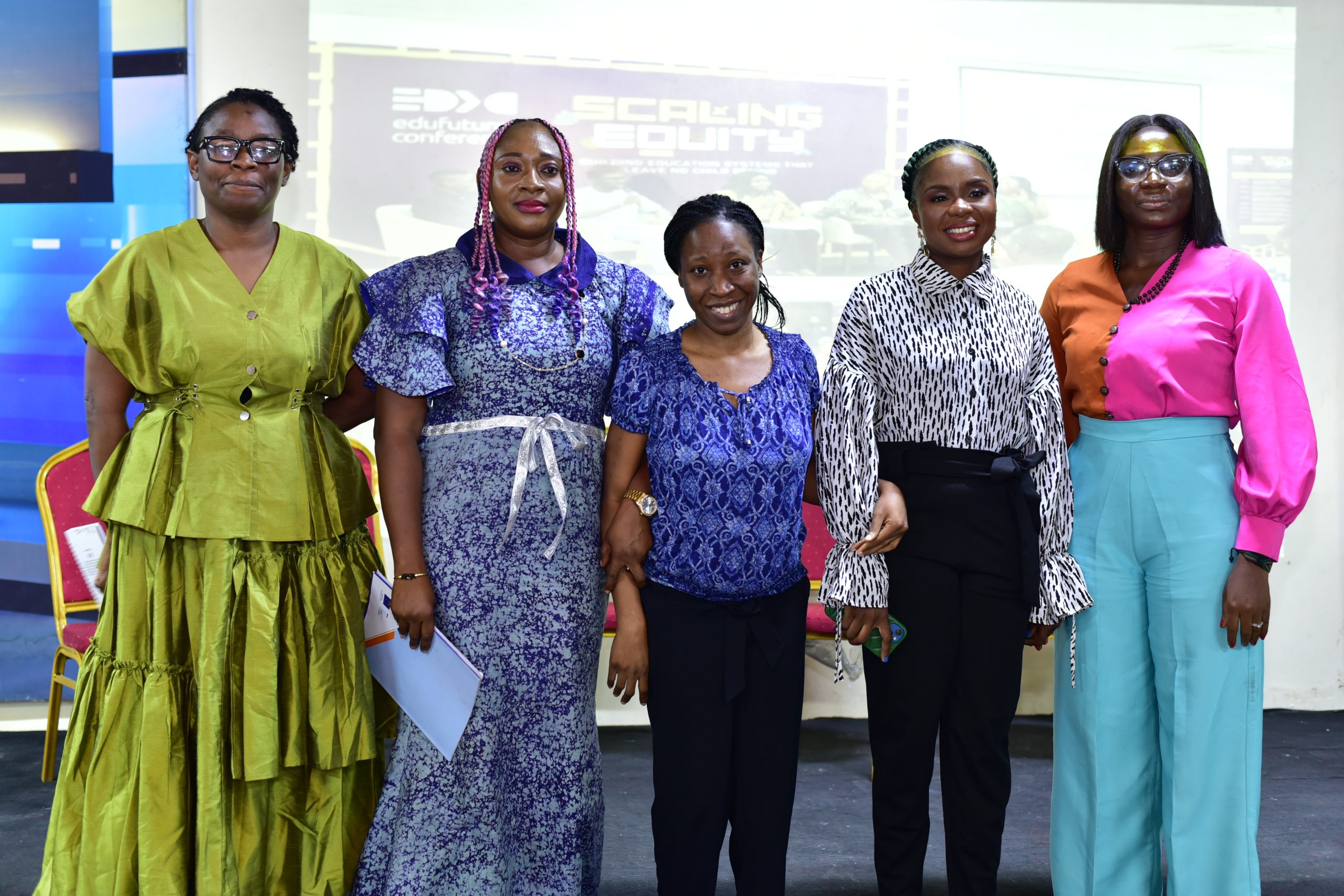
A key moment of the conference was the EduFuture Commitment Wall, where participants publicly pledged to take concrete actions towards expanding educational access, strengthening child protection, promoting responsible Artificial Intelligence literacy, and creating safer learning environments. This initiative underscored the conference’s emphasis on moving beyond dialogue to accountability and measurable progress.
The event also featured an inspiring EduTalk delivered by Godwin Henry, a Human Capital and Education Policy Practitioner. He challenged participants to recognize the power of individual action, encouraging everyone to contribute in their own way. He stated, “Don’t underestimate what you can do. You don’t need to run like me. There is something you can do,” reinforcing the idea that meaningful societal change begins with individual acts of courage and commitment.
Moderated by Obasanjo Fajemirokun, Founder and Executive Director of Brace-Up the Young, the conference also included a compelling spoken word performance by Breakthrough Adeleke that reinforced themes of equity, inclusion, and hope for every child.
Attendees described the conference as insightful and transformative. Taiwo Sholadoye, a software developer, remarked, “the future of education is everyone’s responsibility,” while Sophie Nneji of Living Vines Mental Health Foundation shared that the event strengthened her resolve, saying, “I need to protect every child I come across,” reflecting EduFuture’s broader call for collective responsibility in advancing child protection and educational equity.
Post-event evaluation revealed an overall participant satisfaction score of 4.5 out of 5, with speakers receiving an impressive 4.75 out of 5. Moreover, 100 percent of respondents indicated they would recommend the EduFuture Conference and attend future editions, underscoring its growing reputation as a vital platform for educational leadership, cross-sector collaboration, and systemic change in Nigeria’s education sector.
As EduFuture Conference 2026 concluded, stakeholders reaffirmed that achieving equitable education in Nigeria requires sustained partnerships, inclusive policies, increased investment in teachers, responsible innovation, and collective accountability. The ideas, commitments, and collaborations initiated during the conference aim to bolster advocacy efforts, influence policy discussions, and inspire initiatives that will build education systems where every child has the opportunity to learn, thrive, and succeed.