Elections, Debts, and Arbitrary Fees in OOH Advertising: Industry Leaders Demand Ethical Reform at OAAN’s 41st AGM
By Azeez Disu
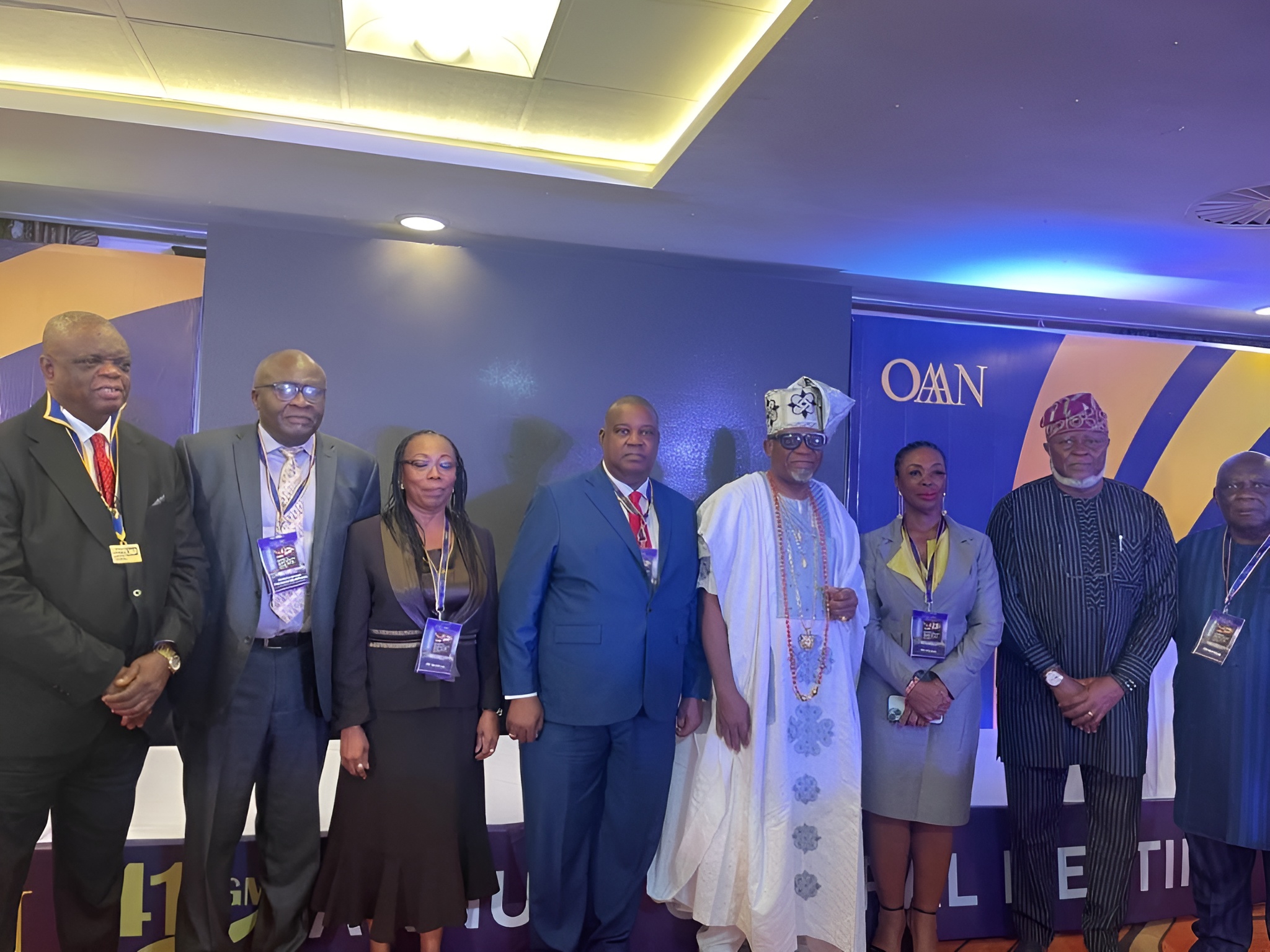
The Out-of-Home Advertising Association of Nigeria (OAAN) recently convened its 41st Annual General Meeting (AGM) at the A.A Entertainment & Tourism (Formerly Park Inn by Radisson) in Abeokuta, Ogun State, to confront critical regulatory, political, and ethical pressures reshaping the outdoor advertising sector ahead of the nation’s next political campaign season.
The high-stakes assembly, themed “Out-of-Home Advertising Association of Nigeria in Political Campaign Season: Policies, Politics, and Fair Practice,” brought together marketing communication heads, regulatory bodies, and industry practitioners to debate how the sector can maintain professional standards, resist arbitrary state-level levies, and ensure equal media access for all political contenders.
A Shift From Transaction to Transformation
Opening the congress, Chief ‘Sola Akinsiku, President of OAAN, championed a historic shift in how the outdoor advertising business is conducted in Nigeria. Reflecting on his administration’s tenure, Akinsiku declared:
“We have inherited a system of transactions. It is time to begin the process of transformation that will engender and strengthen the quality of our service delivery, guarantee higher returns on the advertisers’ visibility communications investments and usher our practice and business into the realm of unhindered productivity and profitabilityWe have inherited a system of transactions. It is time to begin the process of transformation that will engender and strengthen the quality of our service delivery, guarantee higher returns on the advertisers’ visibility communications investments and usher our practice and business into the realm of unhindered productivity and profitability.”
Akinsiku emphasised that this collective struggle is ultimately about “the sanctity of the industry we serve” and ensuring that brands promoted on out-of-home (OOH) platforms receive enduring, effective visibility.
As part of this transformation, he revealed “tremendous progress” in the ongoing national audience measurement exercise. Subscribed to by all critical sub-sectors of the marketing communication industry, the project is designed to delive “reliable, dependable, and industry-wide acceptable data” to help operators deploy, manage, and assess the reach of OOH platforms with absolute scientific integrity.
The Politicisation of the Skies: Keynote Speaker Decries Selective Enforcement
Delivering a blistering keynote address, Dr Theodore Okwunicheta Ejikeme (T.O.E.) Ekechi, Chairman of the Marketing & Media Group, traced the rich history of political outdoor advertising in Nigeria. He recalled that modern political OOH began in 1963, when Chief Obafemi Awolowo and the Action Group pioneered modern outdoor campaigns by using skywriting during rallies ahead of the 1964 elections.
Ekechi argued that given the unique communication environment of developing nations, OOH cannot be dismissed as a mere “support medium”. It is the leading communication channel, supported by studies showing that exposure to outdoor advertisements by the electorate reaches up to 94 per cent in some states.
However, Ekechi warned that this immense influence has made the industry a prime target for hostile political and regulatory manipulation. He strongly condemned the exorbitant, prohibitive, and non-negotiable outdoor campaign permit fees currently imposed by state signage agencies. He argued that these fees are selectively designed to price out the political opposition, while the ruling parties remain “self-accounting” effectively paying and receipting the fees to themselves.
Addressing the sudden imposition of new regulations at the onset of elections, Ekechi raised a poignant sporting analogy:
“Why enact a new rule while the match is in play? Why change the goal post while the match is in play?”
Beyond regulatory hurdles, Ekechi highlighted the trauma of post-election debt, where victorious politicians routinely abandon their financial obligations, leaving agencies completely helpless due to the fear of regulatory victimisation. He also flagged the physical dangers faced by field crews who risk harassment by sponsored political thugs, and the urban blight caused by the indiscriminate pasting of small posters on public infrastructure.
To combat these challenges, Ekechi urged the realisation of the OAAN Charter to give the association legal teeth. He further proposed a structural reform to shield individual business owners from state victimisation:
“OAAN staff should be entrusted with executive powers so that they can indeed speak truth to power without fear of reprisal or victimising axe from regulators.”
He concluded by stressing that “political neutrality” must remain the greatest asset of the association.
Royal Backing and Charter Breakthrough: The Ooni of Ife’s Representative Delivers Vital Progress Update
Adding a prestigious layer of cultural and royal validation to the proceedings, Otunba Ayodele Olumoko, the Cultural Ambassador and consultant for the Olojo Festival, attended the AGM to represent the throne of His Imperial Majesty, the Ooni of Ife, Oba Adeyeye Enitan Ogunwusi. Delivering Oba Ogunwusi’s personal greetings, Olumoko also brought monumental news regarding OAAN’s long-standing quest for legal empowerment through its official Charter. He revealed that the Ooni of Ife, who has remained an unwavering supporter of the association since decorating OAAN’s leadership years ago, had actively supported the bill during its public hearing. Olumoko announced to the delighted congress:
“It is now well understood that, after the third reading, the Senate consented to the Charter approximately two or three weeks ago. Baba [the Ooni] has instructed me to inform you that, within a few days, this process should be finalised with the assent of the President.”
Good Debt vs. Bad Debt: MIPAN President Demystifies Industry Finances
Addressing the long-standing, often-contentious issue of industry debt, the President of the Media Independent Practitioners Association of Nigeria (MIPAN), Dozie Okafor, delivered a masterclass on the financial mechanics of media buying. He urged practitioners to stop bundling all outstanding monies into a single, negative category, arguing that debt must be bifurcated into “good debt” and “bad debt”.
“There’s good debt and there’s bad debt,” Okafor explained. “I was having a conversation with one of my partners and he says, ‘You’re owing me a lot.’ I said, ‘That’s a good thing. My clients are also owing me a lot. The moment they stop owing me, I should be worried because that means they stop doing business with me. At every point in time, 50% of my billing is being owed to me. Now, that’s a good thing.”
Conversely, he defined “bad debt” as toxic liabilities stemming from late invoice submissions, poor reconciliation practices, weak internal financial controls, or outright financial misconduct.
Okafor strongly debunked the common practice of inflating debt figures. He shared a recent encounter where an outdoor partner claimed his agency owed a random figure of 500 million Naira. Upon investigation, it was revealed that this figure included forward invoices extending all the way to December, despite the conversation occurring in August.
“That is not a realistic analysis of debt,” he asserted. “The fact that you’ve been given an MPO [Media Purchase Order] till December doesn’t mean that money is due and doesn’t mean it is owed to you.”
To resolve these structural bottlenecks, Okafor outlined the rigorous practices employed by his agency, including paying vendors twice monthly to inject constant liquidity into the ecosystem, and establishing mandatory monthly or quarterly reconciliations with key vendors to eliminate financial surprises.
Despite these observations, Okafor reaffirmed that media agencies and OOH practitioners are “natural partners” whose survival is deeply interconnected. Having observed campaign billboards already active along the highway on his drive from Lagos to Abeokuta, he urged practitioners to enforce transparent and equitable pricing and to comply fully with regulatory approval processes.
Upholding Standards Beyond the Ballot: EXMAN Demands Level Playing Field
Representing the experiential marketing subsector, Tolulope Medebem, President of the Experiential Marketers Association of Nigeria (EXMAN), delivered warm congratulations to OAAN and echoed the timely nature of the political theme. She observed that campaign seasons place practitioners at a complex intersection of creativity, public discourse, commercial interest, and national responsibility.
Medebem argued that “fair practice” is not a passive exercise in regulatory compliance, but an active commitment to protecting the integrity of the profession. She called for an industry-wide level playing field where “excellence, not expediency” dictates campaign success.
In a powerful closing charge, Medebem reminded the audience that the decisions made today will define the legacy of the Nigerian marketing communication ecosystem:
“Political seasons come and go, governments change, campaigns end, but the institutions we all are building and the standards we all are upholding will remain long after the campaign posters have come down. Let us together therefore ensure that whatever our role in the communications ecosystem is, we leave behind an industry that future generations will be proud to inherit.”
As the marketing communications industry prepares to steer Nigeria through another intense democratic exercise, the consensus from Abeokuta is that only through uncompromising ethics, robust data measurement, royal and legislative backing, and strategic collaboration can practitioners turn the pressures of the political campaign season into a catalyst for permanent industry transformation.