NAC 2026: Marketers Urged to Rethink Strategy as Consumers Feel Economic Pressure
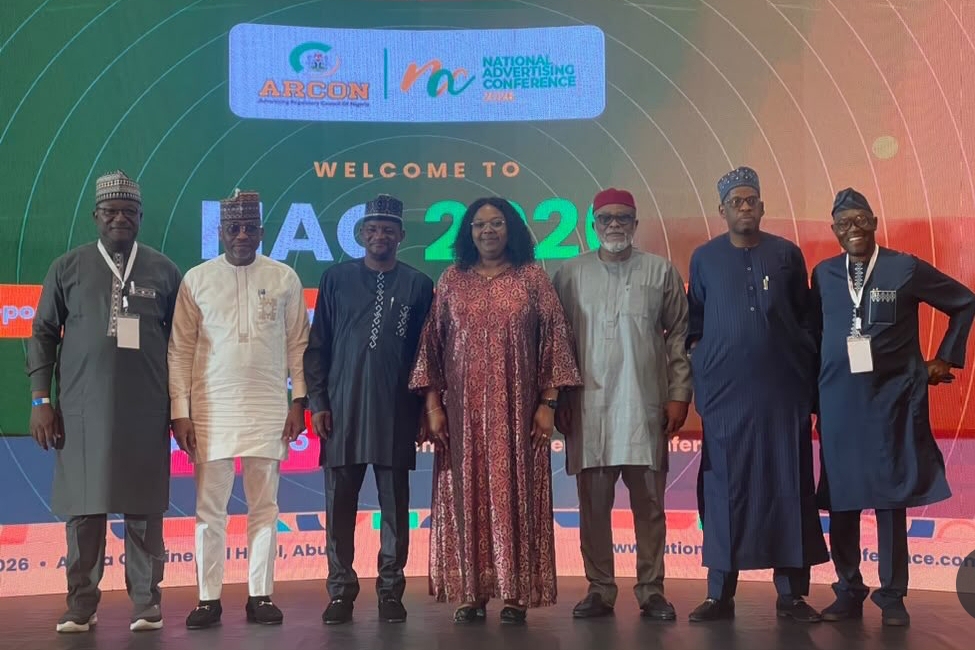
Nigeria’s marketing and advertising leaders have gathered in Abuja for the 6th National Advertising Conference (NAC 2026), where discussions are focusing on artificial intelligence, consumer purchasing power, regulatory change and the future of brand communications.
Running from 11 to 13 November under the theme “Repositioning the Marketing Communications Industry for the Next Frontier,” the conference brings together government officials, regulators, business executives and industry stakeholders.
Delivering the opening address on behalf of the Minister of Information and National Orientation, Alhaji Mohammed Idris, Permanent Secretary Dr Binyerem Ukaire commended the Advertising Regulatory Council of Nigeria (ARCON) for continuing to convene the annual forum.
The Minister said the Federal Government recognises the creative and advertising sector as an important contributor to national development. He also acknowledged the opportunities artificial intelligence offers brands, while cautioning that its use raises questions about authenticity and consumer privacy.
In his welcome address, ARCON Director-General Dr Olalekan Fadolapo urged the industry to move beyond simply adapting to change and instead anticipate and lead it. He said technology should be guided by human insight and ethical standards, and highlighted the sector’s economic contribution.
“A recent study by PwC estimates that for every ₦1 spent on marketing communications in Nigeria, the nation’s GDP increases by a staggering ₦16.50, confirming that our industry has emerged as a formidable economic powerhouse,” Dr. Fadolapo stated.
Fadolapo said repositioning the sector supports the Federal Government’s Nigeria First Policy, which prioritises locally produced goods, Nigerian talent and domestic enterprise. He also pointed to regulatory measures—including a 45-day payment threshold, due diligence requirements, local content enforcement and the operationalisation of the Advertising Offences Tribunal—as steps towards a more transparent market.
NAC 2026 Organising Committee Chairman Tunji Adeyinka said the industry’s “next frontier” is already changing how consumers assess trust and engage with media. He said the programme addresses issues ranging from broadcast digitisation, audience measurement and generative AI to the African Continental Free Trade Area (AfCFTA), Gen Z media habits and the informal economy.
A panel moderated by Lampe Omoyele examined how Nigeria’s economic outlook could shape marketing strategy ahead of the 2027 election cycle. The discussion considered growth projections, inflation, interest rates, foreign exchange stability and consumer sentiment.
Panelist Olu Akanmu noted that, despite signs of macroeconomic stabilisation, more than 160 million Nigerians—around 60% of the population—remain in poverty. He urged marketers to refocus their marketing mix on value and affordability, and called for greater government investment in healthcare and education.
Adeyinka Jemi-Alade, TGI Group’s Group Head of Integrated Marketing Communications, also emphasised the need for consumer empathy. She said economic stability had yet to translate into stronger household purchasing power, with consumers prioritising basic needs and opting for more affordable alternatives.
Looking ahead to 2027, Jemi-Alade advised advertisers to balance short-term sales objectives with long-term brand building. She said clear communication of product value and the development of genuine “brand love” remain important reasons to sustain marketing investment.
The conference continues through 13 November, with technical workshops, regulatory discussions and sessions on responsible data stewardship and promoting Nigerian creativity globally.fu