NADDC Woos Private Capital for CNG, EV Infrastructure as Nigeria’s Clean Mobility Drive Gathers Pace
Council certifies 345 CNG conversion centres, says infrastructure deficit threatens wider adoption
By Daphne Uduneje
Nigeria’s ambition to accelerate the transition to cleaner and more affordable mobility is increasingly shifting from policy formulation to the more difficult question of infrastructure, with the National Automotive Design and Development Council (NADDC) calling for greater private-sector investment in Compressed Natural Gas (CNG) refuelling stations and electric vehicle (EV) charging networks.
The council said the success of Nigeria’s clean mobility agenda will depend not only on the growing availability of CNG-powered and electric vehicles, but also on the development of a nationwide infrastructure network capable of supporting motorists conveniently and reliably.
Against this backdrop, NADDC is urging investors to view CNG and EV infrastructure as an emerging business opportunity, particularly as the country seeks to reduce dependence on petrol, lower transportation costs and align its automotive industry with the global shift towards cleaner energy.
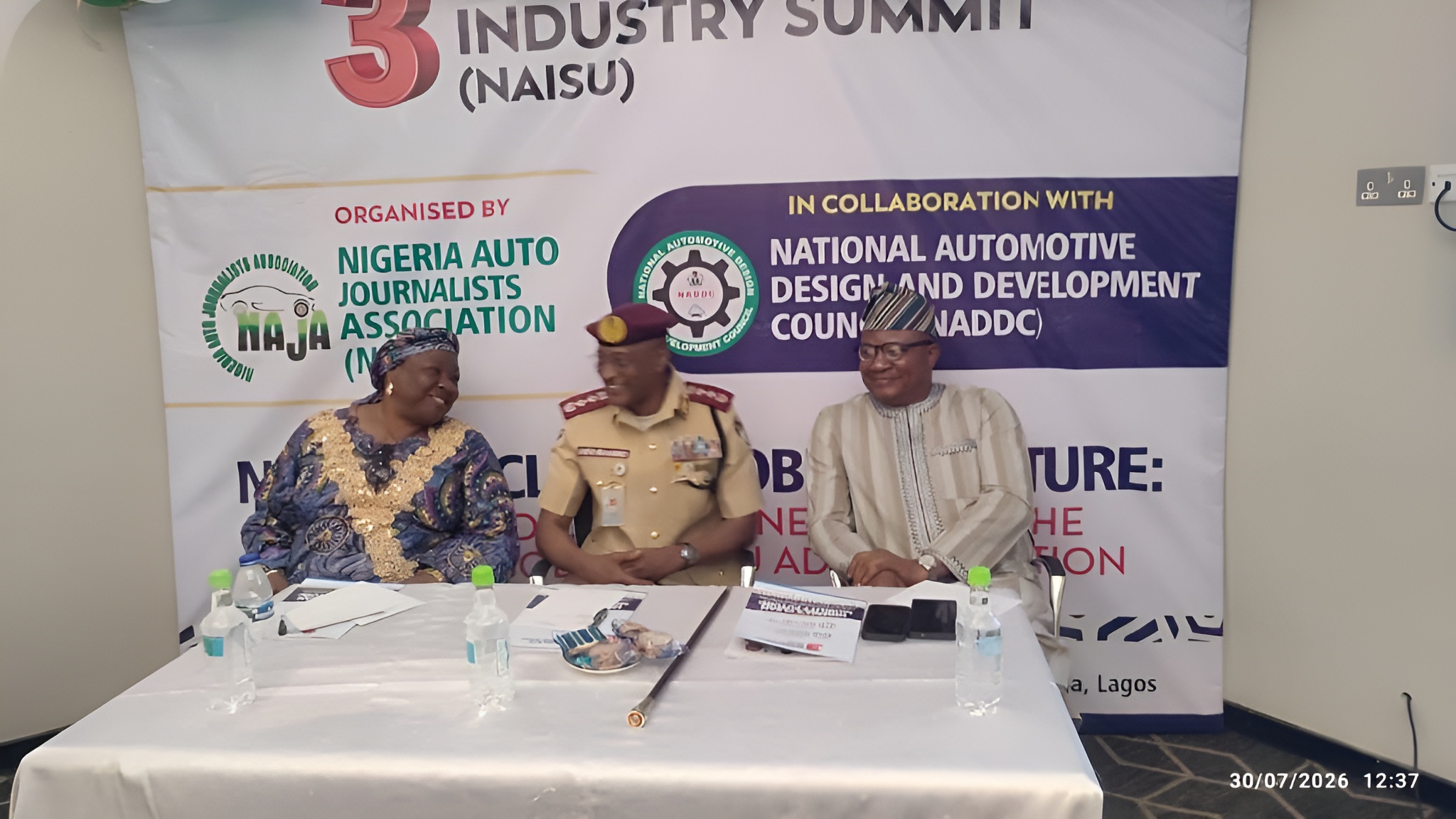
Speaking at the third Nigeria Auto Industry Summit (NAISU), organised by the Nigeria Auto Journalists Association (NAJA) in Lagos, Susan Taiwo, Director of Public Relations, NADDC, who represented the council’s Director-General, said the agency had spent more than two decades laying the groundwork for Nigeria’s automotive transformation, including early investments in mechatronics, electric mobility and alternative energy technologies.
The summit, themed “Nigeria’s Clean Mobility Future: The EV and CNG Journey Under the President Bola Tinubu Administration,” brought together key stakeholders to examine the opportunities and challenges confronting Nigeria’s transition to cleaner transportation.
Taiwo said the council’s early focus on mechatronics and electric vehicle technology was based on its recognition that the global automotive industry was moving towards alternative propulsion systems, despite the limited understanding of the technologies in Nigeria at the time.
“More than 20 years ago, many people questioned our emphasis on mechatronics and electric vehicles. They were asking what is mechatronics and my DG explained that, that is where the world is going – EV and CNG,” she said.
According to her, the global acceleration of clean-energy adoption has validated the council’s earlier efforts, leaving Nigeria with little choice but to deepen its participation in the emerging mobility ecosystem.
“Today, the world has embraced clean energy, and Nigeria cannot afford to be left behind,” she added.
CNG network expands, but infrastructure remains thin
One of the more immediate opportunities, according to NADDC, lies in the expansion of CNG infrastructure.
Taiwo disclosed that the council has so far certified 345 CNG conversion centres nationwide, with the facilities subjected to regulatory oversight to ensure compliance with prescribed safety and operational requirements.
“As of today, the council has certified 345 conversion centres nationwide, and we continue to monitor them to ensure compliance with established standards,” she said.
The certification of the centres represents an important step in building confidence around Nigeria’s CNG conversion ecosystem, particularly as more motorists consider switching from petrol-powered vehicles.
But the growth in conversion capacity is exposing another critical weakness in the value chain: inadequate access to CNG refuelling facilities.
While more vehicles are being converted to CNG, the availability of refuelling infrastructure has not expanded at the same pace, creating congestion at existing stations and potentially discouraging motorists from making the switch.
Taiwo said CNG offers motorists a cleaner and potentially more economical alternative to petrol, while also providing opportunities to reduce vehicle operating and maintenance costs and cut harmful emissions.