Pi-CNG: Clean Mobility Investment Critical to Lower Transport Costs, Energy Security
Ahmed seeks stronger private capital, infrastructure expansion, local manufacturing and media partnership to accelerate Nigeria’s CNG, EV transition
By Daphne Uduneje
Nigeria’s push to reduce transportation costs and strengthen energy security is increasingly tied to the country’s ability to build a commercially viable clean mobility ecosystem, with the Presidential Initiative on Compressed Natural Gas and Electric Vehicles (Pi-CNG & EV) calling for deeper private-sector investment, infrastructure expansion and stronger industry collaboration.
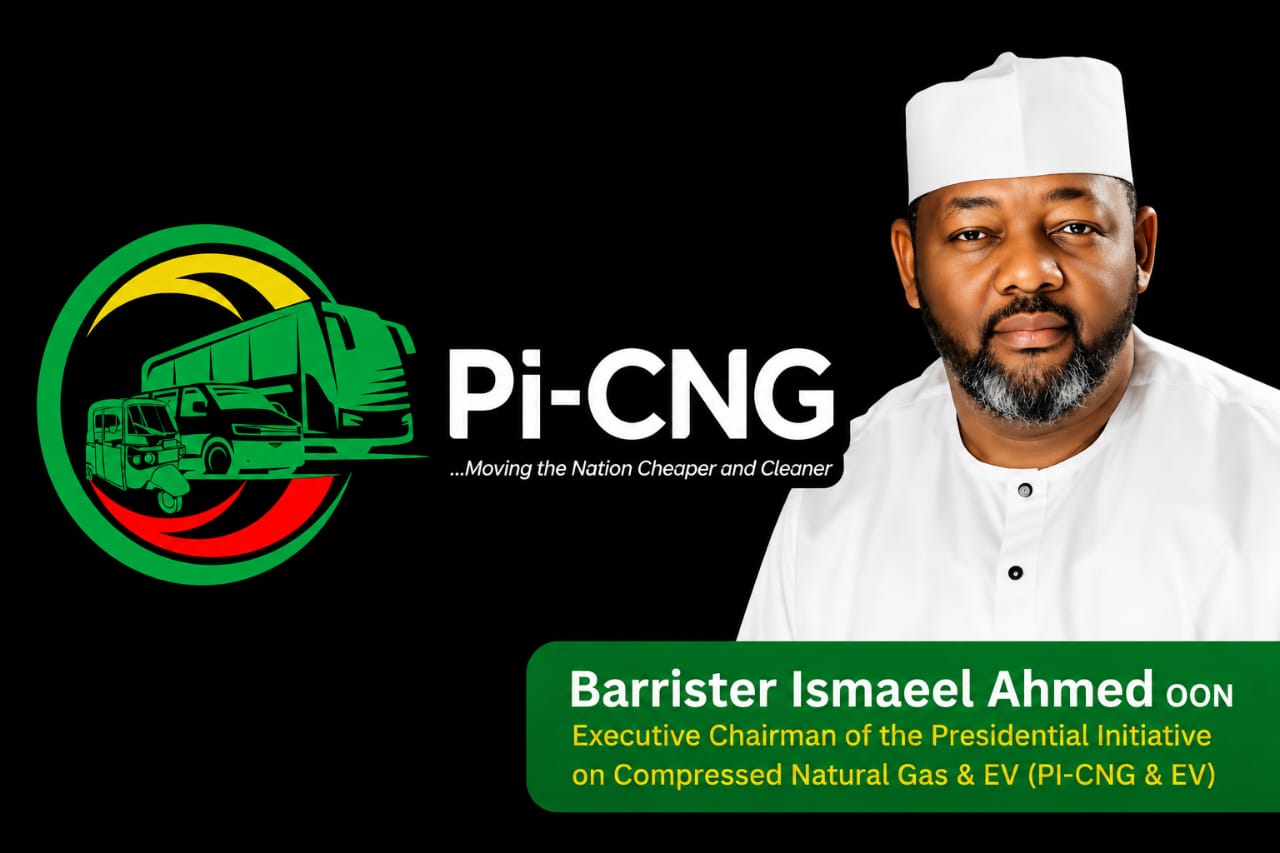
Executive Chairman and Chief Executive Officer of Pi-CNG & EV, Barrister Ismaeel Ahmed, said the transition to cleaner mobility has moved beyond policy aspiration to become a critical component of Nigeria’s broader transport, energy and industrial strategy under President Bola Ahmed Tinubu’s administration.
Ahmed made the submission while delivering the keynote address at the 3rd Nigeria Auto Industry Summit (NAISU), organised by the Nigeria Auto Journalists Association (NAJA), on the theme, “Nigeria’s Clean Mobility Future: The EV and CNG Journey Under the Bola Tinubu Administration.”
For Nigeria, he argued, the clean mobility transition presents a strategic opportunity to tackle some of the structural pressures confronting the transport sector while unlocking new investment opportunities across energy, automotive manufacturing, infrastructure, finance and technical services.
He explained that Pi-CNG & EV was established to coordinate the country’s transition towards cleaner transportation by developing a robust ecosystem around compressed natural gas (CNG) and electric vehicles (EVs).
According to him, the Initiative’s mandate goes beyond promoting alternative fuels, encompassing infrastructure development, vehicle conversion, investment mobilisation, local manufacturing, technical skills development, financing and consumer confidence.
Ahmed said the initiative emerged against the backdrop of the Federal Government’s decision to remove fuel subsidy, which created an urgent need for more affordable and sustainable transportation alternatives capable of leveraging Nigeria’s abundant natural gas resources.
“From the outset, our approach has been to build the foundations of a sustainable industry rather than pursue isolated interventions,” he said.
The approach, he explained, has required sustained engagement with regulators, investors, vehicle manufacturers, conversion companies, financial institutions, development partners, transport unions and state governments.
CNG ecosystem expands.
Ahmed said the CNG ecosystem has recorded significant expansion over the past two years, with the establishment of more certified conversion centres and an increase in refuelling infrastructure through both public and private-sector investment.
Vehicle conversions, he added, have also continued to rise as commercial transport operators and private motorists increasingly recognise the potential cost advantages of CNG.
The expansion has simultaneously created demand for a skilled workforce, with thousands of technicians trained to undertake conversion services safely and professionally.
Beyond physical infrastructure, Ahmed said Pi-CNG & EV has entered strategic partnerships with financial institutions, vehicle manufacturers, energy companies and state governments to address some of the financing and investment constraints limiting the pace of adoption.
The emphasis on financing is particularly significant in a market where the upfront cost of vehicle conversion, acquisition of CNG-compatible vehicles and development of supporting infrastructure can remain a barrier for operators and consumers.
Technology, he said, is also becoming increasingly important to the integrity of the emerging ecosystem.
Ahmed disclosed that the introduction of the Nigeria Gas Vehicle Monitoring System would strengthen transparency, regulatory oversight, safety compliance and consumer confidence across the conversion industry.
The system, he explained, is expected to provide a stronger framework for monitoring activities within the conversion ecosystem while supporting efforts to maintain safety and professional standards.
EVs remain part of long-term strategy
While CNG currently occupies a prominent position in Nigeria’s clean mobility transition, Ahmed stressed that the Federal Government’s strategy is not anchored on a single technology.
He said Pi-CNG & EV remains committed to advancing electric mobility as part of a broader, technology-neutral approach to reducing emissions and transforming Nigeria’s transportation system.
The government, he noted, is engaging manufacturers, investors and development partners on EV deployment, charging infrastructure, local assembly and the policy reforms required to stimulate market development.
The development of an EV ecosystem, however, will require substantial capital investment, particularly in charging infrastructure, vehicle supply chains, technical capacity and local manufacturing.
Ahmed therefore identified infrastructure expansion, consumer financing, local manufacturing, technical training, research and development, innovation and standardisation as critical areas requiring sustained attention.
These, he said, are not challenges government can address alone.
Rather, the next phase of Nigeria’s clean mobility transition will depend on the ability of public and private stakeholders to convert policy ambitions into investable projects, scalable infrastructure and commercially sustainable business models.
Investment opportunity
For investors, the emerging clean mobility ecosystem potentially extends well beyond the vehicles themselves.
It encompasses CNG refuelling stations, conversion centres, gas distribution, charging infrastructure, vehicle assembly, component manufacturing, maintenance services, financing, insurance, technology platforms and technical training.
Ahmed’s position therefore places private capital at the centre of the next phase of Nigeria’s mobility transition, particularly as the government seeks to expand infrastructure without placing the entire financial burden on public resources.
He stressed that stronger collaboration among government, investors, manufacturers, transport operators, financial institutions, development partners and other industry stakeholders would be essential to overcoming existing bottlenecks.
Media as strategic stakeholder
Ahmed also placed the media at the centre of the clean mobility transition, describing journalists as strategic stakeholders in shaping public understanding and market confidence.
He urged members of NAJA to intensify public education around the economic benefits of CNG and EVs, safety standards, investment opportunities and emerging technologies.
“The transition to clean mobility is as much an information challenge as it is an infrastructure challenge. Public understanding influences public acceptance, while market confidence is built on accurate, timely and responsible information,” he said.
He pledged that Pi-CNG & EV would strengthen its engagement with the media through regular technical briefings, industry dialogues and improved access to reliable data.
The objective, he said, is to counter misinformation and ensure that public debate around CNG and EV adoption is informed by credible technical and economic information.
From policy to commercially viable ecosystem
Looking ahead, Ahmed said Pi-CNG & EV would intensify efforts to expand CNG infrastructure nationwide, strengthen the regulatory framework, support local manufacturing and conversion capacity, deepen financing partnerships and work with stakeholders to establish a commercially viable and sustainable clean mobility ecosystem.
But beyond infrastructure statistics and adoption numbers, he said the ultimate test of the government’s clean mobility strategy would be its impact on the wider economy and the daily lives of Nigerians.
“The ultimate measure of success would not be the number of conversion centres or refuelling stations established,” Ahmed noted, stressing that the real benchmark should be the extent to which clean mobility lowers transport costs, creates jobs, stimulates industrial growth, strengthens energy security and improves the quality of life of Nigerians.
His position underscores the broader economic stakes surrounding Nigeria’s clean mobility transition.
If successfully implemented, the shift to CNG and EVs could evolve from a response to high transportation costs into a catalyst for domestic manufacturing, energy diversification, technical employment and new investment across the automotive value chain.
Ahmed commended NAJA for providing a platform for industry dialogue, noting that sustained collaboration between government, the private sector and the media would remain critical to shaping Nigeria’s mobility future.