The Great Disconnect: NIMN and LBS Bridge the Gap Between Marketing Strategy and Cultural Reality in New Study
By Azeez Disu
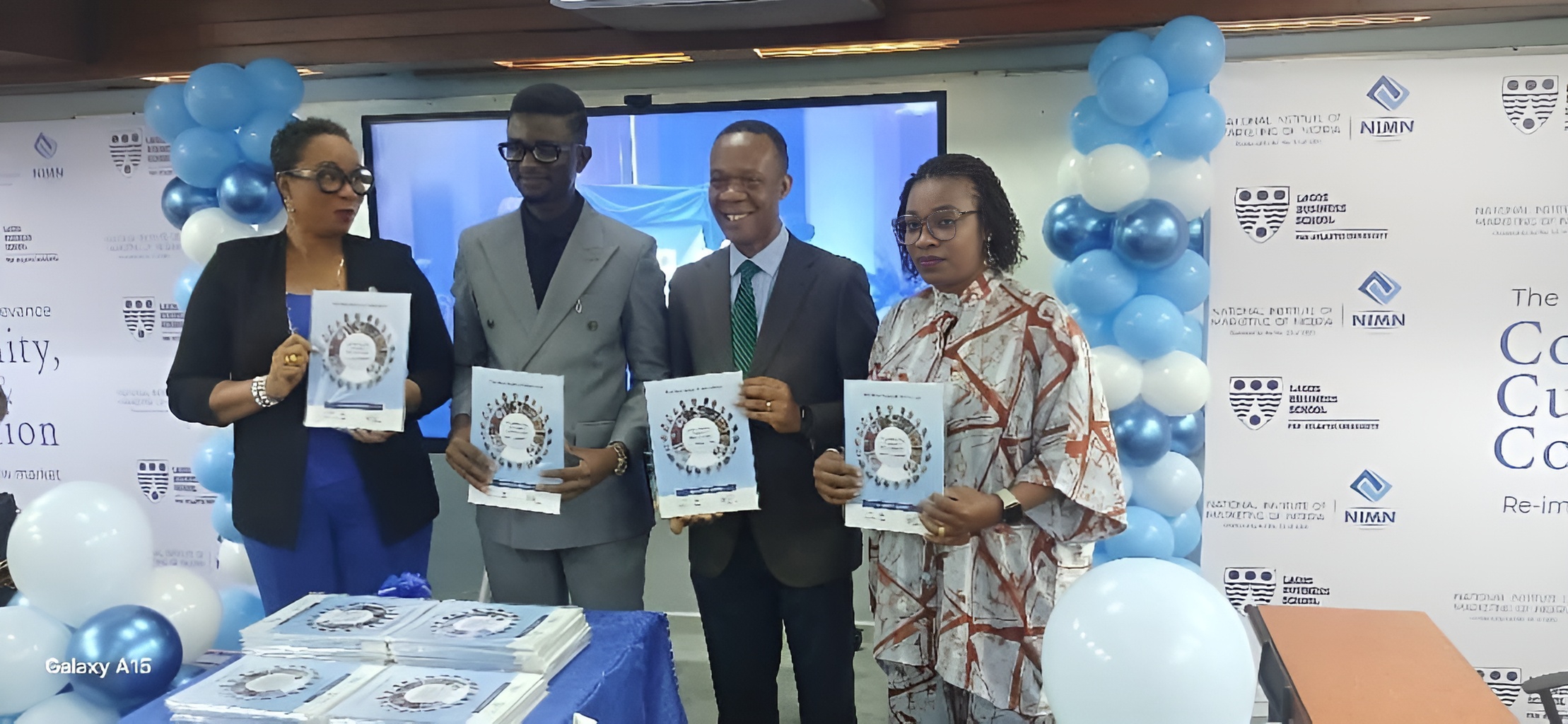
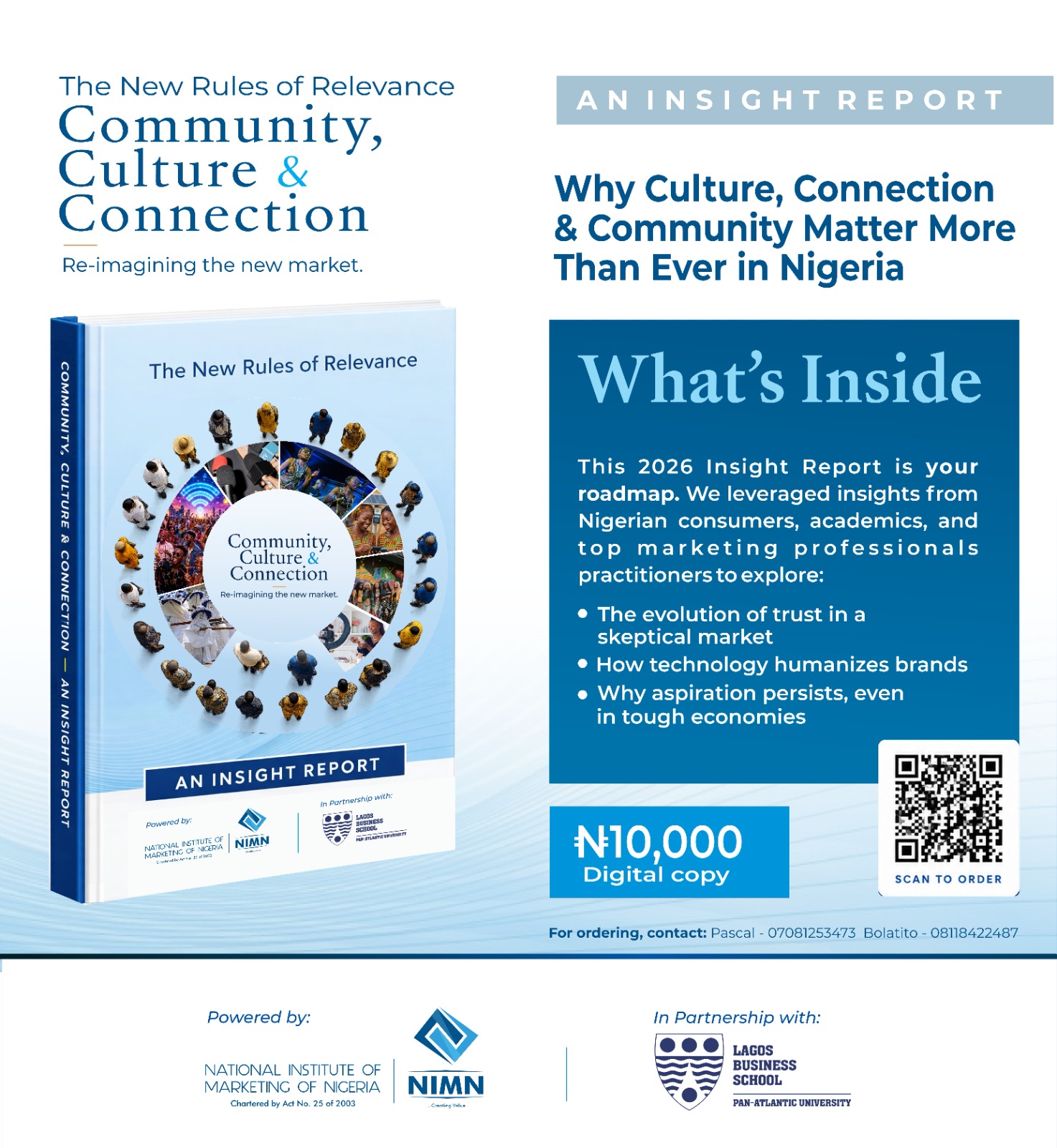
In an era where traditional marketing playbooks are being rewritten by a more discerning and vocal consumer base, the National Institute of Marketing of Nigeria (NIMN) and the Lagos Business School (LBS) have unveiled a landmark study that promises to be a “reawakening” for the industry. Titled “Community, Culture, and Connection: Re-imagining the New Market,” the report provides a documented framework for practitioners to navigate an ecosystem where communal trust has overtaken simple reach.
Reflecting on the genesis of the project, the President of NIMN, Dr. Bolajoko Bayo-Ajayi, expressed her profound excitement at seeing a strategic vision transition into reality. She emphasised that the report was born from a desire to understand the pulse of the market beyond the confines of a single conference. Addressing the marketing community, she warned against the “arrogance” that can sometimes permeate multinational and FMCG boardrooms.
”We established a strategic town and gown partnership with the Lagos Business School to ensure that what is being taught in the classroom truly resonates with today’s market reality,” Dr. Bayo-Ajayi explained. She further noted in recent discussions that marketers must “step out of their bubble” to understand how consumers truly want to be seen and heard. “Consumers have gone beyond the traditional playbooks,” she observed, highlighting that engagement is no longer about “likes or comments” but about co-creation—where consumers are part of the conversation from the very start.
Adding to this vision of a more integrated approach, Professor Uchenna Uzo, Deputy Vice-Chancellor (Academic) of Pan-Atlantic University, pointed to a startling “perception gap” identified in the research. While 60% of marketers believe they are successfully engaging their audience, only 30% of consumers agree.
Professor Uzo urged a fundamental mindset shift, observing that, “Consumers want to feel like they are part of the board”. He noted that the report serves to “reawaken” businesses to the fact that loyalty is shifting. Factors such as service time, variety, and regional differences are now primary drivers of loyalty, yet many businesses have failed to adjust. “The reality now is that customers are looking beyond today and they are asking themselves real questions about value,” Uzo stated, stressing that consistency in quality across different locations and times is the bedrock of maintaining that loyalty.
The cultural weight of these findings was echoed by Thelma Okoh, the Registrar of NIMN, who described the report as an “unvarnished lens” through which to view the future of Nigerian commerce. For Okoh, the report’s themes of community and culture are not merely academic—they are the “very language of Nigeria”.
”When we speak of community, culture, and connection, we are speaking the very language of Nigeria,” Okoh stated. “In Nigeria, community is our safety net and our launchpad. The ‘New Market’ is no longer just a physical space or a digital platform; it is a communal ecosystem where trust is the primary currency. Nigerian consumers do not just buy products; they buy into stories, identities, and heritage”.
The Panel Session: Breaking Down the Data
The unveiling featured a high-level panel session moderated by Dr. Omotola, where industry experts delved into the report’s nuances. A significant point of discussion was the evolving role of influencers. The panel highlighted a shift in efficacy away from macro-celebrities towards micro- and nano-influencers who act as true community leaders. These figures sit at the vital intersection of purchase decisions, as Nigerian buyers heavily consult their communities before committing to a product. The panel concluded that brands must move away from “superficial alignments” and focus on collaborating with these grassroots leaders to build authentic, brand-owned communities.
Objective and Methodology of the Report
The primary objective of the report is to reawaken Nigerian businesses to the reality that the consumer has moved on, providing them with a data-driven blueprint to understand what “value” means in the current economic climate. It seeks to change the narrative that Nigeria lacks localized consumer data, validating long-standing market assumptions with empirical evidence.
To achieve this, the methodology was rigorous and nationally representative:
• Scope: The researchers spoke to over 300 brands, companies, and customers.
• Geographic Coverage: The study spanned all six geopolitical zones of Nigeria to capture regional variations in consumer behaviour.
• Data Collection: A multi-pronged approach was adopted, including surveys, multiple focus group sessions for marketing practitioners, and one-on-one in-depth interviews.
This “strategic town and gown partnership” ensures that the gap between academic curriculum and marketplace reality is bridged, creating a unified voice for the advancement of the marketing profession in Nigeria.