World Hydrography Day: Nigeria to Modernise Hydrographic Data Collection and Sharing
Nigeria is set to join the international maritime community in commemorating World Hydrography Day (WHD) 2026, emphasising the modernisation of ocean data collection, management, and sharing ; a move aimed at bolstering maritime safety, driving economic growth, and promoting environmental sustainability.
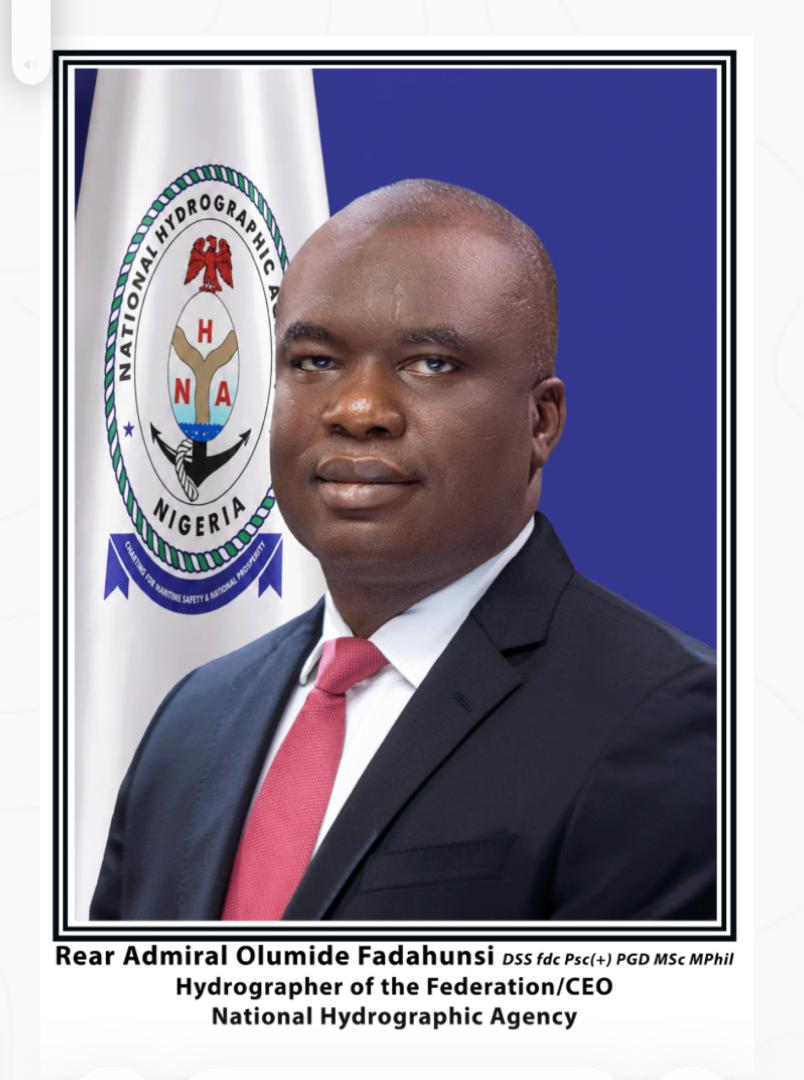
During a press briefing at the National Hydrographic Agency (NHA) Headquarters in Abuja on Tuesday, the Hydrographer of the Federation and Chief Executive Officer of the NHA, Rear Admiral Olumide Fadahunsi, revealed that Nigeria’s official WHD celebration will be held on Saturday, June 20, 2026, at the Lagos Oriental Hotel, Lagos.
The theme for 2026, “Transforming How Ocean Data is Shared,” aligns with the strategic objectives of the International Hydrographic Organization (IHO) and underscores the shift towards advanced S-100-based hydrographic data services. These include the S-101 Electronic Navigational Charts (ENCs) and S-102 Bathymetric Surface products, which support the International Maritime Organization’s approved use of S-100 Electronic Chart Display and Information Systems (ECDIS) in global shipping.
WHD is observed annually on June 21 to highlight hydrography’s vital role in enhancing maritime safety, fostering economic development, and safeguarding the marine environment worldwide.
Admiral Fadahunsi pointed out that, while the theme is rooted in technical innovation, it has been deliberately articulated in accessible language to engage policymakers, industry stakeholders, academia, and the wider public.
He emphasised that modern hydrography and digital ocean-data services are critical to ensuring maritime safety, facilitating efficient trade, supporting offshore operations, environmental protection, fisheries management, and coastal resilience planning.
He stated, “Hydrography remains the bedrock of maritime safety, ocean governance, and environmental protection. By transforming how ocean data is organised, standardised, and shared, Nigeria can reduce navigational risks, enhance maritime trade efficiency, and contribute to safer regional and global sea lanes.”
The flagship event for WHD will feature a plenary session bringing together hydrographic experts, researchers, policymakers, industry leaders, and development partners. The discussion will focus on how improved ocean-data sharing can strengthen navigation safety, maritime administration, and the Blue Economy across Nigeria and Africa.
The session will include three technical presentations on: inclusive governance in Africa’s Blue Economy, the application of geospatial intelligence in marine decision-making, and the strategic utilisation of ocean data to support sustainable offshore energy development and indigenous participation in the oil and gas sector.
A high-level panel discussion will follow, offering recommendations on policy, regulation, infrastructure development, and capacity building essential for advancing digital ocean-data systems.
Expected outcomes include raising awareness of S-100-based products and services, fostering collaboration among hydrographic offices and maritime stakeholders, improving accessibility and interoperability of ocean data, and elevating hydrography’s role in climate resilience, maritime security, and sustainable economic growth.
Rear Admiral Fadahunsi highlighted that Nigeria’s celebrations align with global initiatives such as the United Nations Sustainable Development Goal 14 (Life Below Water) and the UN Decade of Ocean Science for Sustainable Development (2021–2030), both of which underscore the importance of reliable ocean data for sustainable marine resource management.
He called on the media to amplify the importance of World Hydrography Day and to raise public awareness of the National Hydrographic Agency’s efforts in implementing modern hydrographic standards and fostering international collaboration.
In his words, “As we say in the Nigerian Navy, ‘Onward Together.’ Let us work collectively to transform how ocean data is shared today so that we can secure safer, smarter, and more sustainable oceans for tomorrow,” he concluded.