Deep Learning Indaba 2026: Africa’s AI Future Takes Center Stage in Lagos as African Innovators Convene
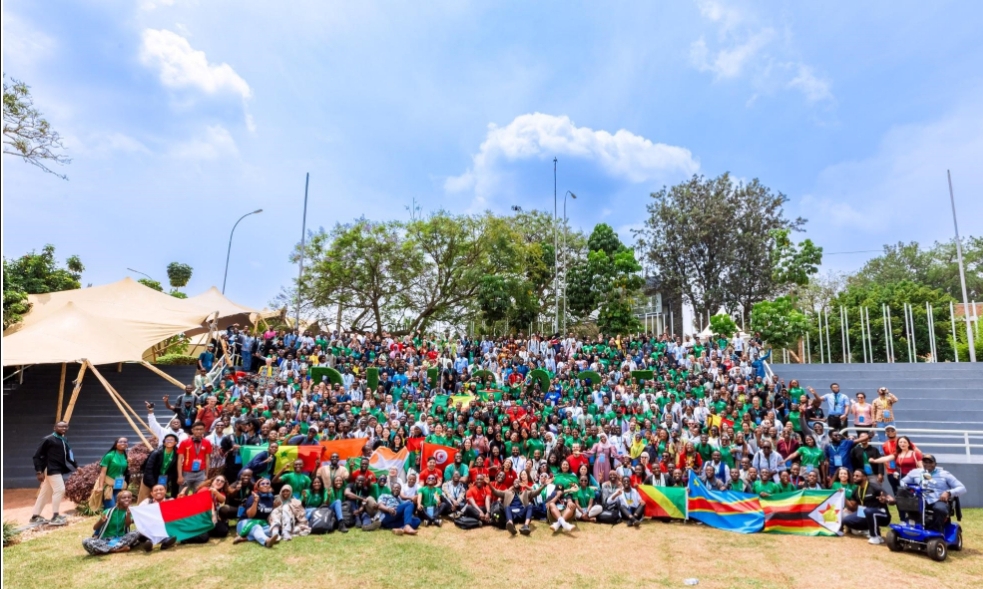
The Deep Learning Indaba (DLI), Africa’s leading grassroots movement dedicated to advancing machine learning and artificial intelligence (AI), has announced its eighth annual continent-wide gathering. The landmark event is scheduled to take place from August 2nd to August 7th, 2026, at Pan-Atlantic University in Lagos.
As the global technological landscape rapidly progresses toward Artificial General Intelligence (AGI), the 2026 Indaba will focus on a vital theme: Sovereign Intelligence. The conference aims to emphasize the importance of Africa developing its own digital infrastructure, data systems, and scientific leadership—independent of external influences—to shape its technological future.
Founded in 2017 by a group of passionate researchers, the Deep Learning Indaba has grown from a localized initiative into an official registered charity, now driven by more than 60 dedicated organizers. Moving beyond the scope of a traditional academic conference, the Indaba has evolved into a comprehensive pan-African movement. Its mission is to empower Africans to transition from mere consumers of global technology to active creators, innovators, and owners of the next generation of AI.
This year’s gathering promises to be the most inclusive and expansive yet, drawing together researchers, engineers, policymakers, startups, and students from across Africa and the diaspora. With a focus on fostering local talent, building community-led infrastructure, and promoting indigenous AI solutions, the Indaba seeks to catalyze Africa’s emergence as a key player in the global AI ecosystem.
Scale, Diversity, and Community Impact
The 2026 edition is set to be the most inclusive and expansive to date, welcoming over 1,000 engineers, researchers, students, startups, and policymakers representing 45 countries across Africa and the global diaspora.
Through highly competitive scholarships, localized mentorship initiatives, and strategic international partnerships, the Indaba lowers systemic barriers to ensure equitable representation from every corner of the continent. Attendees will participate in an immersive week featuring world-class keynotes, rigorous technical tutorials, interactive workshops, research showcases, and the launch of the annual pan-African Hackathon.
Six Key Pillars Shaping the African AI Ecosystem
The 2026 program directly addresses the unique challenges and massive opportunities within the continent via six technical and structural themes:
1. Sovereign African NLP & Language Evaluation: Spearheaded by full-day
Masakhane Workshops, this track targets community-led data collection for local African languages and critically re-evaluates global benchmark limitations.
2. Community-Led Data Infrastructure & Decolonial AI: Capacity-building sessions focused on sustainable, community-led dataset creation to break dependence on western-centric data paradigms.
3. AI Safety, Red-Teaming, and Model Alignment: Practical, hands-on protocol workshops designed to build native red-teaming capacity tailored specifically to African cultural and systemic contexts.
4. High-Impact Applied AI (Climate & Health): Scaling African AI innovations from early-stage prototypes into localized solutions for healthcare delivery and responsible climate action.
5. Intellectual Property, Law, and Digital Public Infrastructure (DPI): Navigating the legal frontiers of African AI assets and integrating inclusive public intelligence within digital government frameworks.
6. Core ML Engineering & Next-Gen Compute: Upskilling talent with advanced tutorials in GPU kernel programming (using Triton to build faster Transformers) and exploring Quantum Machine Learning for Africa (QML4Africa).
Elite Speaker Lineup & Keynote Visionaries
The event brings together an unprecedented assembly of continental and global pioneers, including:
● Akua Gyekye – Microsoft’s Head of Government Affairs for Africa
● Bosun Tijani – Honorable Minister of Communications, Innovation and Digital Economy of Nigeria.
● Catherine Nakalembe – Keynote Speaker; Assistant Professor of Geospatial AI at the University of Maryland and founder of the Xylem Lab and Xylem Institute
● David Adelani – Assistant Professor at the McGill University School of Computer Science
● Karim Lekadir – ICREA Research Professor in the Department of Mathematics and
Computer Science at the University of Barcelona
● Kate Kallot – Founder & CEO of Amini
● Margaret Mitchell – Keynote Speaker; Researcher and Chief Ethics Scientist at Hugging Face
● Olatunbosun Alake – Commissioner of Science and Technology in Lagos State, Nigeria
● Vukosi Marivate – Keynote Speaker; Chair of Data Science, Professor of Computer Science, University of Pretoria
Global Backing & Strategic Sponsorship
The scale and impact of the 2026 Deep Learning Indaba are made possible through vital international partnerships and local tech champions that share the movement’s vision for African technological sovereignty.
This year, the Indaba is proudly supported by foundational sponsors and partners who contribute everything from financial funding to vital in-kind support. We are honored to collaborate with Adaption, AI Skills and Compute Africa (AISCA), Amini, Apple, Askya, Cambridge University Press, Cassava AI, CISPA, Cohere, Curnance, DAIR, Datawise Africa,
EqualyzAI, Ethihuku, FCDO, Google DeepMind, Google Research, IDRC, Ishango.ai, Isazi AI, ITU, Kenya Airways, Masakhane, Microsoft Research, Mila, Schmidt Sciences, The Agency Fund, Udu Technologies, Ventures Platform, Wellcome, and Zindi.
The Deep Learning Indaba 2026 General Chairs stated:
“The Indaba is a collective promise that African talent will not stand at the periphery of global AI, but at the centre of its creation and its future. It has never been just a meeting. It is a living, growing expression of what Africans can build when given space, trust and community.
Bringing the Indaba to Nigeria gives this moment even greater meaning. Nigeria represents scale, imagination, and a fearless belief in what is possible. Its researchers, students and builders have shaped the Indaba from the earliest years, and continue to influence the direction of African AI. Hosting the Indaba in Nigeria is both a recognition of its immense contributions and an invitation to dream even bigger together.”
Professor Enase Okonedo, Vice-Chancellor, Pan-Atlantic University
“Pan-Atlantic University is honoured to host the 2026 Deep Learning Indaba and to welcome Africa’s vibrant artificial intelligence and machine learning community to our campus. This gathering reflects our commitment to advancing knowledge, fostering innovation, and encouraging collaboration that contributes to Africa’s development. We are delighted to support an initiative that brings together established experts and emerging researchers, strengthens connections across the continent, and inspires new ideas and partnerships that will help shape the future of science, technology, and society.”
The Deep Learning Indaba sustains its ecosystem and executes its core mission year-round through three foundational programs:
1. The Annual Flagship Event: Moving to a different African host nation each year to democratize access to world-class AI training.
2. IndabaX Local Chapters: Locally run, distributed mini-indabas operating across 47 African countries, ensuring deep grassroots reach, knowledge transfer, and permanent ambassadorship.
3. Excellence in Research & Community Awards: Highly prestigious recognitions—such as the Maathai Impact Award, Anta Diop Community Hero Award, and the Kambule Research Awards—that honor outstanding individual contributions to African computer science.
About the Deep Learning Indaba
The Deep Learning Indaba is a completely grassroots, volunteer-driven movement. It represents the collective efforts of hundreds of researchers and practitioners across the continent working towards a unified goal: to strengthen African machine learning, build local leadership in every African nation, and ensure that Africans are the ultimate shapers and owners of the coming technological frontier.