LCCI: Nigeria’s CNG, EV Ambition Faces Defining Test of Investment, Infrastructure and Policy Execution
As government pushes clean mobility agenda, stakeholders say public-private collaboration, financing, standards and local manufacturing will determine whether Nigeria converts policy ambition into an investable automotive ecosystem. DAPHNE UDUNEJE WRITES.
Nigeria’s push to transform its transportation system through Compressed Natural Gas (CNG) and Electric Vehicles (EVs) is moving beyond the stage of policy declarations into a more difficult phase—one in which investment, infrastructure, regulation and consumer affordability will ultimately determine whether the country’s clean mobility ambition succeeds or stalls.
At stake is more than the replacement of petrol-powered vehicles with alternative-fuel technologies. Nigeria’s emerging clean mobility market sits at the intersection of energy security, transportation costs, industrialisation, job creation, technology transfer and environmental sustainability.
That convergence presents a potentially significant economic opportunity. But it also exposes the structural weaknesses that could prevent the country from fully capturing the value of the transition.
For the Lagos Chamber of Commerce and Industry (LCCI), the immediate priority is to close the gap between policy intent and market execution through stronger public-private collaboration.
The Chairman of the LCCI Auto and Allied Sector Group, Dr. Femi Eguaikhide, made the call at the 3rd Nigeria Auto Industry Summit in Lagos, where policymakers, regulators, vehicle manufacturers, financiers, transport operators, researchers, safety agencies and development partners examined the prospects and challenges confronting Nigeria’s automotive transition.
Organised by the Nigeria Auto Journalists Association (NAJA), the summit was themed, “Nigeria’s Clean Mobility Future: The EV and CNG Journey Under the Bola Tinubu Administration.”
Eguaikhide acknowledged the Federal Government’s commitment to alternative energy solutions through the Presidential Initiative on Compressed Natural Gas and Electric Vehicles (Pi-CNG & EV), but argued that the next phase must be defined by implementation rather than policy announcements.
The distinction is critical.
Nigeria does not merely require more CNG conversion centres, EVs or charging stations in isolation. It requires an interconnected ecosystem in which vehicle conversion, manufacturing, financing, energy supply, infrastructure, technical skills, standards and consumer protection reinforce one another.
From policy ambition to bankable opportunity
The clean mobility transition could become one of Nigeria’s emerging industrial opportunities if the right investment conditions are established.
For a country with a large population, extensive transportation demand and significant natural gas resources, CNG presents an immediate pathway toward reducing dependence on petrol, while EVs offer a longer-term opportunity to reshape the country’s mobility and energy landscape.
But the economic proposition extends beyond the vehicles themselves.
A successful transition could stimulate demand for conversion technologies, gas distribution infrastructure, charging systems, vehicle components, maintenance services, software, technical training and specialised financing.
It could also create opportunities for domestic assembly and manufacturing, allowing Nigeria to capture more value from the automotive supply chain rather than remaining primarily an importer of finished vehicles and components.
This was the broader opportunity highlighted by Eguaikhide, who stressed the strategic importance of the automotive sector to industrialisation, employment generation and economic growth.
He argued that closer collaboration among government agencies, manufacturers, assemblers, financiers and technology providers would be necessary to identify and remove the practical constraints surrounding vehicle conversion, local production, financing and infrastructure development.
His argument points to a fundamental question facing the sector: Can Nigeria build a clean mobility industry, rather than simply build a market for imported clean vehicles?
The answer will largely depend on the policy environment created over the next few years.
Infrastructure: the missing link in the transition
The Federal Government has meanwhile reaffirmed its commitment to expanding the clean mobility ecosystem through infrastructure investment, local manufacturing and strategic partnerships.
Speaking on behalf of the Executive Chairman and Chief Executive Officer of Pi-CNG & EV, Barrister Ismaeel Ahmed, the Initiative’s Chief Compliance Officer, Engr. Zayyanu Tamberi Yabo, described clean mobility as an increasingly important component of the Tinubu administration’s transportation and energy strategy.
According to the initiative, the objective is not to promote alternative fuels as isolated interventions, but to develop an integrated ecosystem encompassing infrastructure, investment, vehicle conversion, manufacturing, technical capacity and consumer confidence.
“Our approach from the beginning has been to build the foundations of a sustainable industry rather than pursue isolated interventions,” Ahmed said.
The initiative’s reported expansion of certified CNG conversion centres, together with the development of additional refuelling stations through public and private investment, represents an important step.
However, the larger challenge is scale.
For CNG and EV adoption to move from pockets of activity to mass-market deployment, infrastructure must expand in tandem with demand. Consumers will be reluctant to purchase or convert vehicles if refuelling and charging facilities remain inadequate, geographically concentrated or unreliable.
This creates a classic investment dilemma: infrastructure providers need sufficient demand to justify investment, while consumers need infrastructure before they are willing to embrace new vehicle technologies.
Government intervention and private capital therefore have complementary roles to play in breaking that cycle.
Transport economics could become the strongest driver
One of the most compelling arguments for CNG adoption is not necessarily environmental—it is economic.
Transport costs have become an increasingly important component of household expenditure and business operating costs. For commercial transport operators, logistics companies and other businesses whose operations depend heavily on fuel, the economics of energy consumption can directly influence profitability and the prices ultimately paid by consumers.
The potential for CNG to reduce operating costs could therefore become a powerful market driver.
If the savings associated with CNG are sustained, reliable and sufficiently large, adoption could accelerate organically among commercial operators and private motorists.
That could have a multiplier effect across the economy, particularly if lower transportation and logistics costs begin to filter into the prices of goods and services.
But affordability remains a major consideration.
The initial cost of vehicle conversion, the financing of new vehicles and the cost of associated infrastructure could place the transition beyond the reach of many households and small businesses without innovative financing mechanisms.
This is where banks, development finance institutions, leasing companies and other financial institutions could become important participants in the clean mobility value chain.
The local manufacturing question
Perhaps the most consequential long-term issue is whether Nigeria can translate the clean mobility transition into industrial capacity.
Importing CNG conversion kits, EVs, batteries and charging equipment may help accelerate early adoption, but it will not, on its own, deliver the full economic benefits of the transition.
The strategic opportunity lies in developing local capabilities.
That includes vehicle assembly, component manufacturing, conversion technologies, battery-related value chains, maintenance and repair services, software, engineering and technical training.
A deeper local ecosystem would reduce import dependence, create skilled employment and potentially position Nigeria as a regional manufacturing and technology hub for West Africa.
The government initiative has identified local manufacturing capacity, research, innovation and technical training as areas requiring sustained investment.
The challenge now is to ensure that incentives and policies are sufficiently predictable to encourage investors to commit capital over the long term.
Standards will determine whether growth is sustainable
As the market expands, however, speed cannot be allowed to undermine safety and quality.
The Director-General of the Standards Organisation of Nigeria (SON), Dr. Ifeanyi Chukwunonso Okeke, represented by Engr. Olalekan Omoniyi, underscored the importance of internationally recognised standards and regulatory compliance to the success of the transition.
SON, he disclosed, has developed more than 80 Nigerian Industrial Standards covering CNG vehicles and equipment, in addition to 87 other standards and the National Nigeria Guideline, NNG 1214:2024, for CNG vehicle conversions.
The development is significant because the clean mobility ecosystem introduces new technical and safety considerations.
Poorly installed CNG conversion systems, substandard components, inadequate charging infrastructure or uncertified vehicles could undermine consumer confidence and expose the public to avoidable risks.
Omoniyi therefore called for compulsory certification of imported and locally assembled EVs, CNG vehicles, conversion kits and charging infrastructure, while warning against uncertified conversion centres and substandard equipment.
For investors, the message is equally important: the emerging market will reward not only capital, but compliance, technical competence and quality assurance.
Clean mobility must also be safe mobility
The Federal Road Safety Corps (FRSC) brought another dimension to the discussion by stressing that the transition must be accompanied by appropriate road safety regulations and operational capacity.
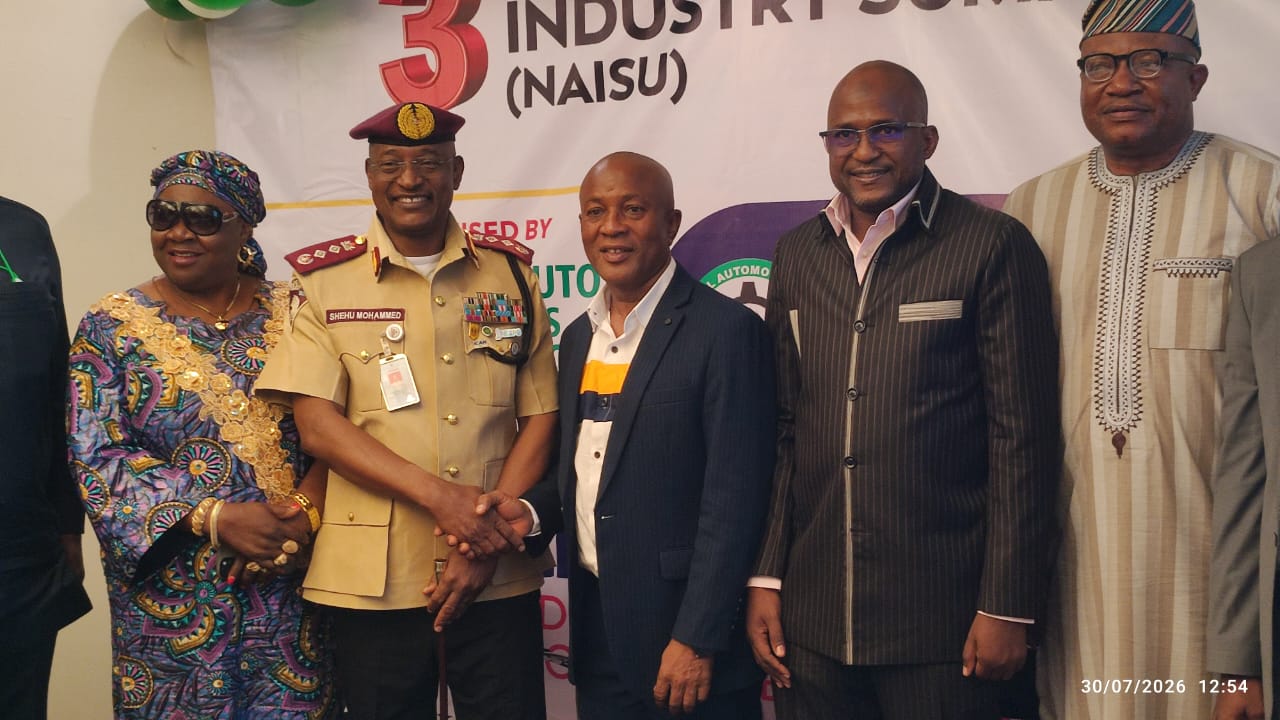
The Corps Marshal, Shehu Mohammed, said the country’s clean mobility programme must be anchored on robust road safety measures, adding that the FRSC was strengthening safety regulations, stakeholder engagement and operational frameworks to support the deployment of CNG and electric vehicles.
This is a critical consideration as the composition of Nigeria’s vehicle fleet changes.
New technologies introduce different operational characteristics, maintenance requirements and safety considerations. The regulatory system must therefore evolve at the same pace as the technology.
In practical terms, the clean mobility transition is not simply an automotive or energy-sector project. It is simultaneously a transport, infrastructure, financial, industrial, environmental and public-safety programme.
The PPP imperative
This explains why the call by LCCI for deeper public-private partnership carries broader significance.
Government possesses the ability to establish policy direction, create regulatory frameworks, provide incentives and, where necessary, catalyse infrastructure investment.
The private sector, on the other hand, provides capital, technology, operational expertise, innovation and market discipline.
Neither side can efficiently build the entire ecosystem alone.
The private sector will require policy stability before committing substantial long-term capital, while government will need private-sector investment to achieve the scale required for nationwide deployment.
Earlier in his welcome address, NAJA Chairman Theodore Opara described the summit as a strategic platform for shaping the future of Nigeria’s automotive industry.
He said reforms under the Tinubu administration had generated fresh momentum around CNG, EVs and local automotive manufacturing, but maintained that sustained collaboration among government, industry stakeholders and the media would be critical to consolidating the gains.
From transition to transformation
The emerging consensus from the summit is that Nigeria possesses several of the ingredients required to develop a competitive clean mobility ecosystem: a large and growing transportation market, natural gas resources, a substantial pool of consumers and a potentially significant industrial base.
What remains uncertain is whether these advantages can be converted into an integrated and commercially sustainable industry.
That will require more than policy statements.
It will require predictable regulation, investment-friendly policies, accessible financing, reliable CNG and EV infrastructure, rigorous standards, technical skills and a deliberate strategy for local manufacturing.
The ultimate test will therefore be measured in tangible outcomes: how many vehicles are successfully converted or deployed; how widely refuelling and charging infrastructure becomes available; how much local manufacturing capacity is created; how many jobs emerge; and, perhaps most importantly, whether ordinary Nigerians and businesses can afford to participate in the transition.
For Nigeria, the clean mobility agenda represents an opportunity to tackle multiple economic challenges simultaneously—from transportation costs and energy security to industrialisation and employment.
But opportunities do not automatically become industries.
The 3rd Nigeria Auto Industry Summit therefore delivered a message that extends well beyond the automotive sector: Nigeria’s CNG and EV transition is now entering the execution phase, and its success will ultimately depend on whether government and business can transform policy ambition into infrastructure, investment, industrial capacity and affordable mobility.
The country has begun the journey. The bigger question is whether it can build the ecosystem required to finish it.