Renewed Hope Skills Programme Equips 18,510 Nigerians for Self-Reliance, Entrepreneurship
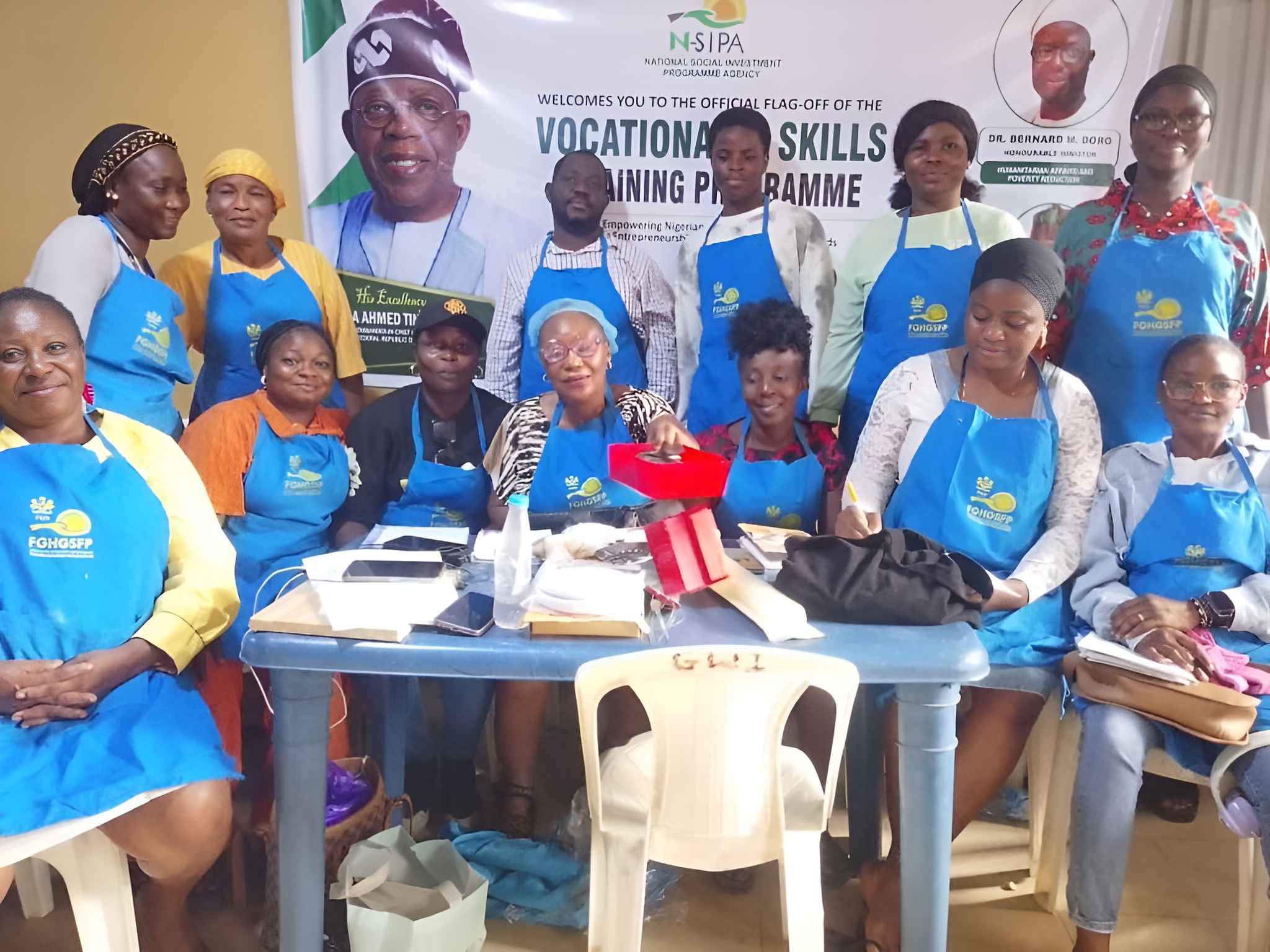
The Federal Government’s Renewed Hope Vocational and Skills Training Programme is gaining momentum nationwide, equipping Nigerians with essential practical skills to foster self-reliance, boost entrepreneurship, and accelerate poverty alleviation efforts.
Implemented by the National Social Investment Programme Agency (NSIPA) under the Federal Ministry of Humanitarian Affairs and Poverty Reduction, the initiative was officially launched by Minister Dr. Bernard M. Doro. Aiming to benefit 18,510 Nigerians across the country, the program marks a significant step toward sustainable economic empowerment.
During the official flag-off, Minister Doro emphasized the importance of the programme, describing it as a “major milestone in the Federal Government’s efforts to tackle poverty through sustainable economic empowerment.” Through a statement issued by her Senior Technical Adviser on Information Systems and Data Analysis, Dr. Abimbola Fasanu, she highlighted that this initiative signifies a strategic shift—from short-term aid to practical skills development that enable beneficiaries to earn sustainable incomes, build resilient livelihoods, and achieve economic independence.
On the third day of training at the Women Development Centre in Agege, Lagos, Programme Coordinator Mrs. Kemilat Opasaye explained how the initiative aligns with President Bola Ahmed Tinubu’s Renewed Hope Agenda. She stated, “The programme reflects President Tinubu’s vision by empowering vulnerable Nigerians with practical skills that will enable them to become economically self-reliant.”
Participants are receiving hands-on training in diverse trades such as tailoring, welding, carpentry, catering, baking, agro-processing, bead and jewelry making, among others. Upon completing the two-week course, beneficiaries will be provided with trade-specific starter packs to kickstart their own businesses.
Mrs. Opasaye emphasized that the programme aims beyond skill acquisition, focusing on creating sustainable livelihoods, reducing unemployment, and fostering entrepreneurial independence. “This initiative is about giving Nigerians the opportunity to acquire practical skills that will improve their lives and enable them to build sustainable sources of income,” she said.
The programme is part of the Ministry’s broader strategy to transition vulnerable Nigerians from dependence to economic self-sufficiency through sustainable empowerment interventions. It complements the Ministry’s One Humanitarian–One Poverty Response System (OHOPRS), which integrates humanitarian aid, social protection, skills development, and economic inclusion into a coordinated national framework for poverty reduction.
Facilitators at the training centers praised the initiative, describing it as a practical intervention that equips participants with marketable skills and entrepreneurial knowledge. They highlighted that the training combines classroom learning with intensive practical sessions, preparing participants for self-employment.
Participants expressed gratitude to the Federal Government for this opportunity. Miss Uche Obinna, a baking class participant, shared that the practical lessons had boosted her confidence to launch her own business. Similarly, Mrs. Adebisi Muhammed, a tailoring trainee, described the programme as a pathway toward financial independence through entrepreneurship.
The Renewed Hope Vocational and Skills Training Programme is being rolled out across Nigeria, reaffirming the government’s commitment to creating sustainable livelihoods, expanding economic opportunities, and lifting Nigerians out of poverty through skills development, enterprise support, and inclusive social protection. Under the leadership of Dr. Bernard M. Doro, the Ministry continues to implement strategic interventions that empower vulnerable Nigerians with the skills and opportunities necessary for lasting economic independence.